

Plant: Oklahoma - Redbud
Redbud Tree · Cercis canadensis subsp. texensis 'Oklahoma'
Size: 15 gal
Light
Bloom
Mature size
More about this plant
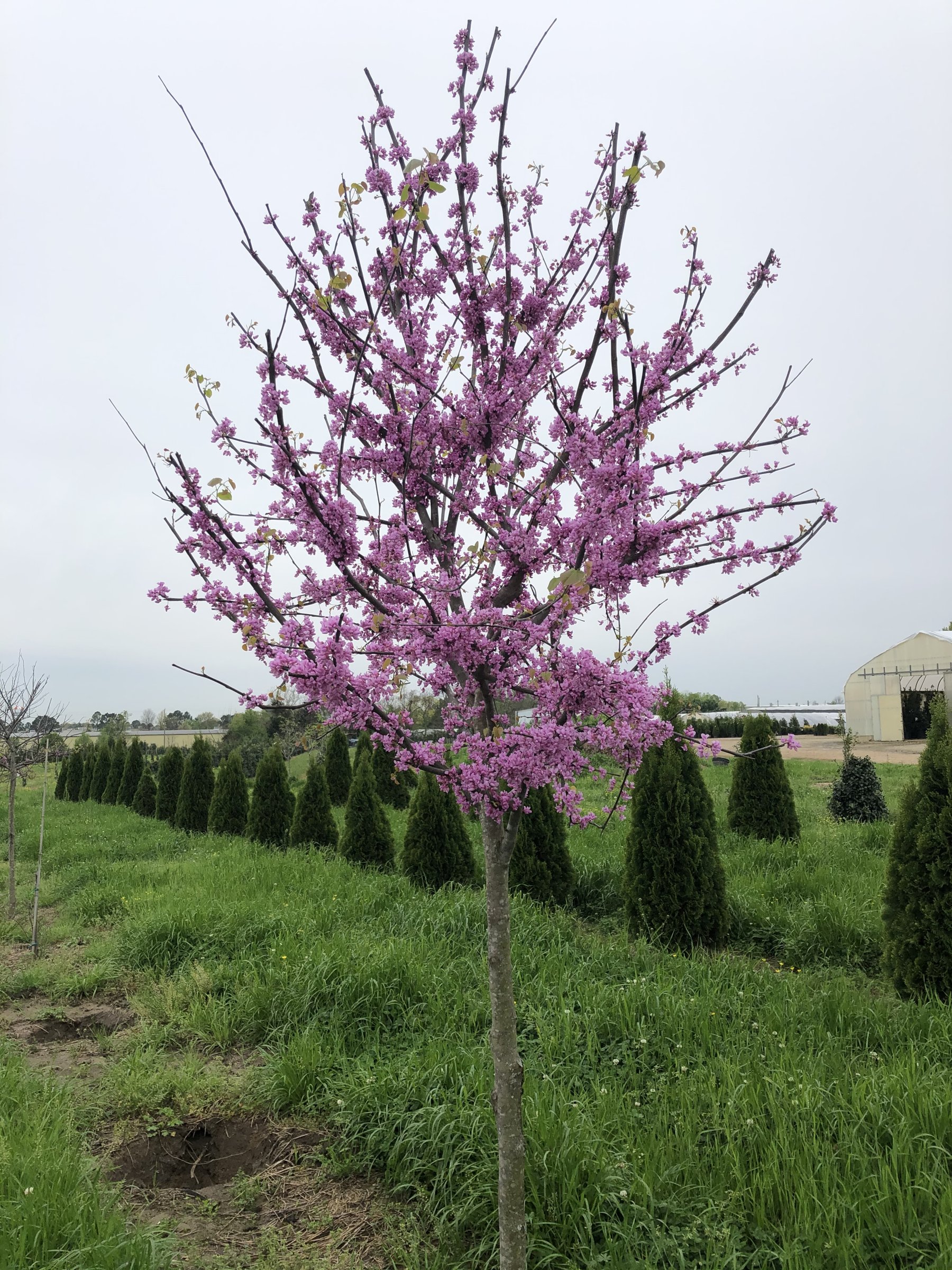
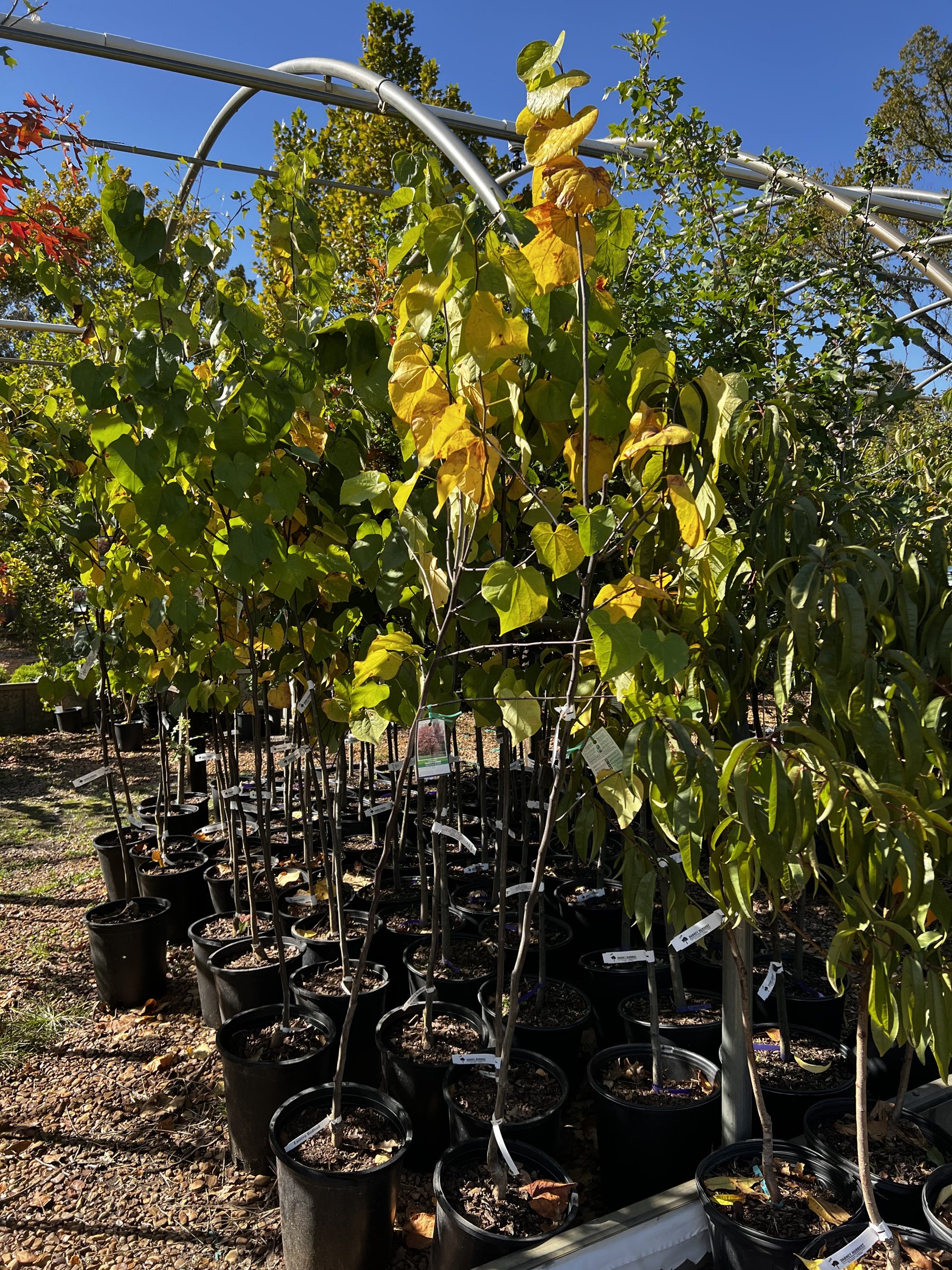
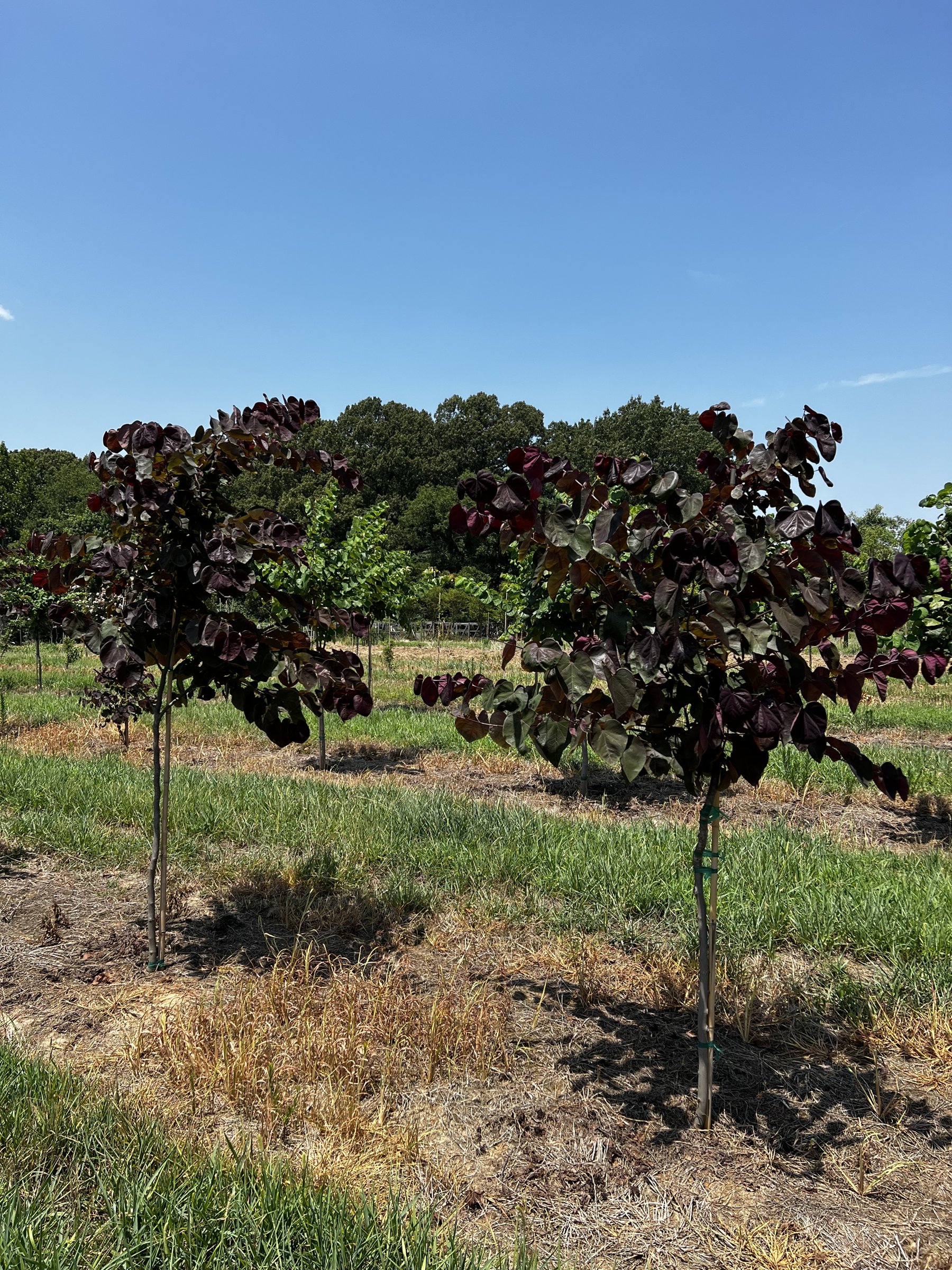
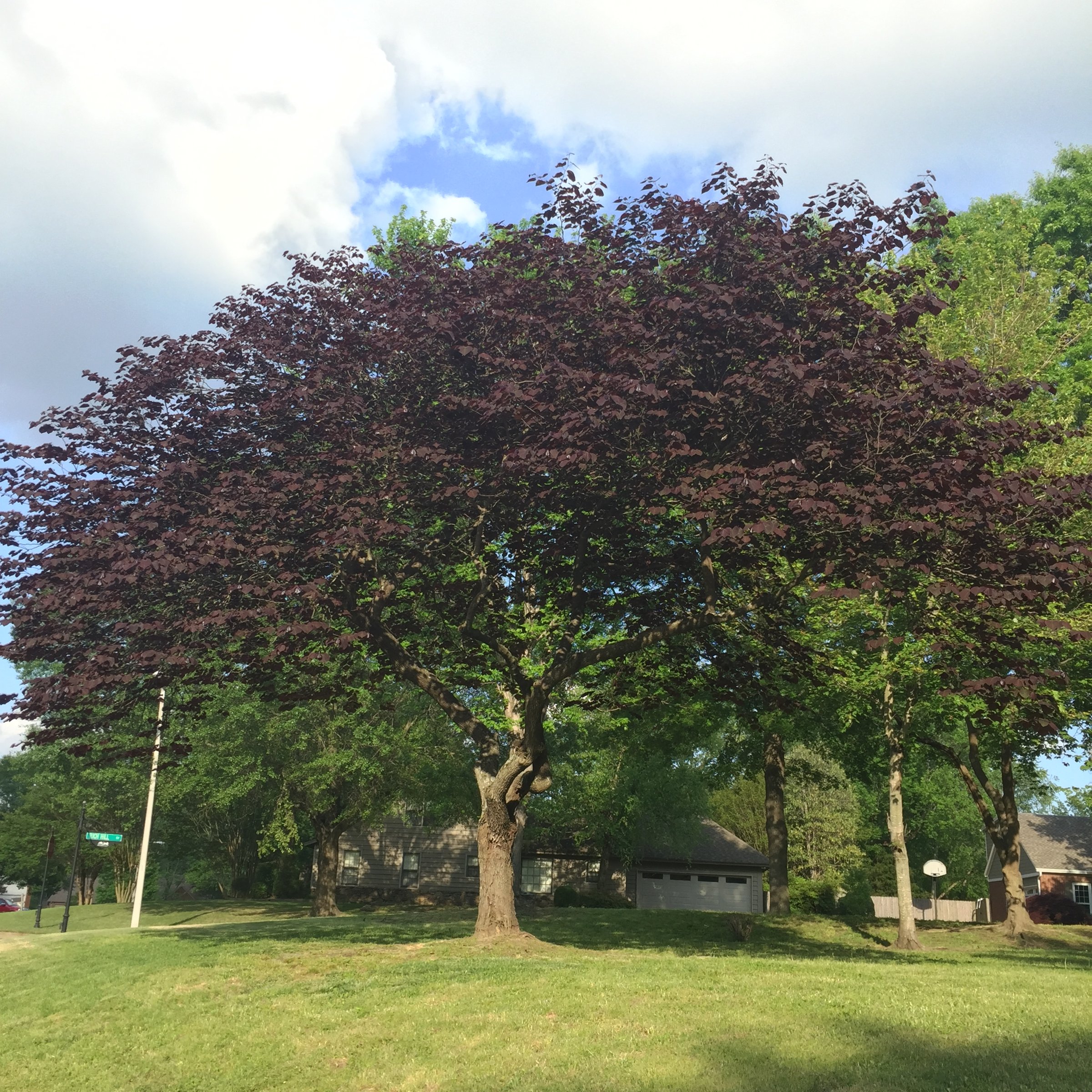
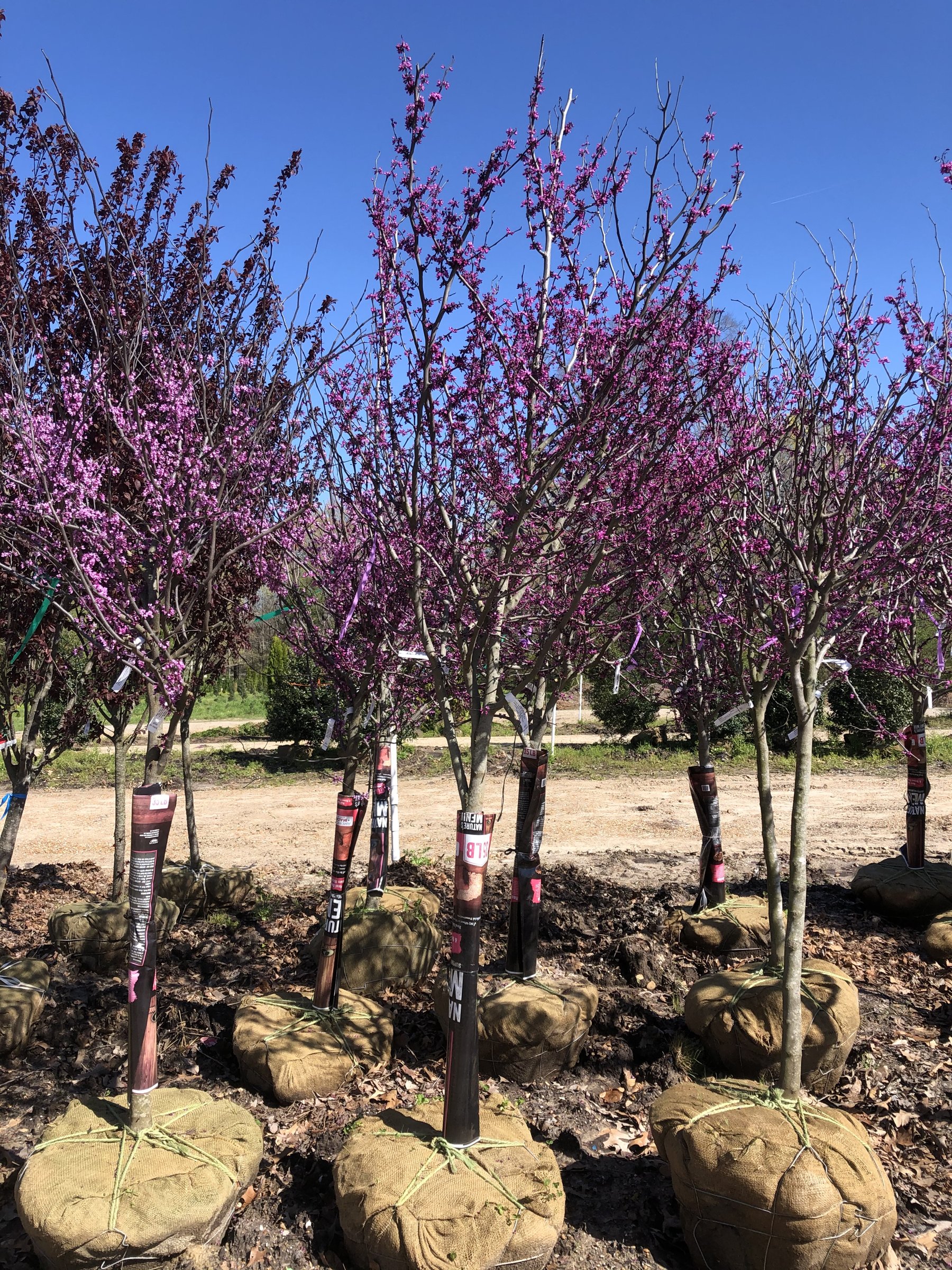
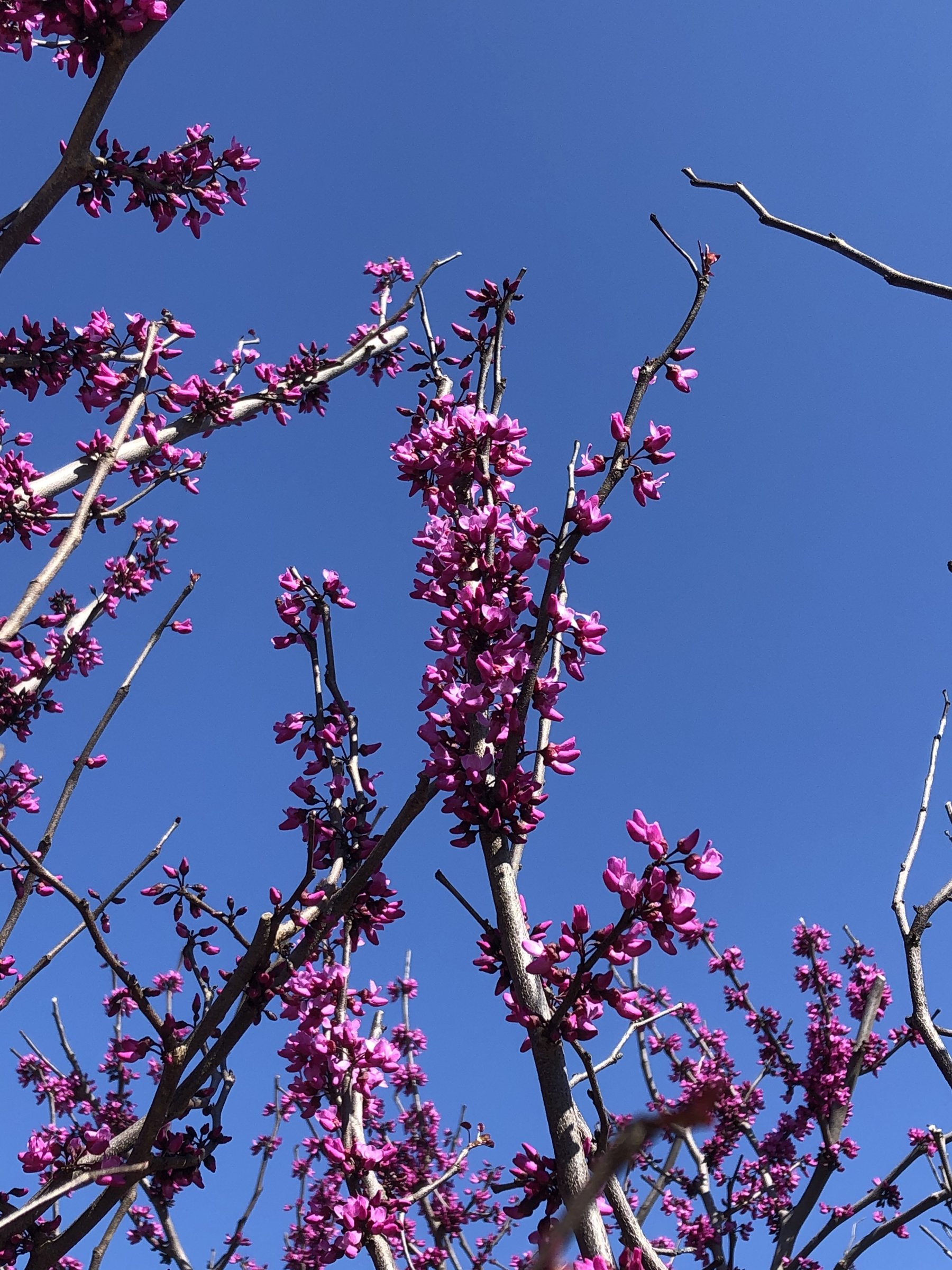
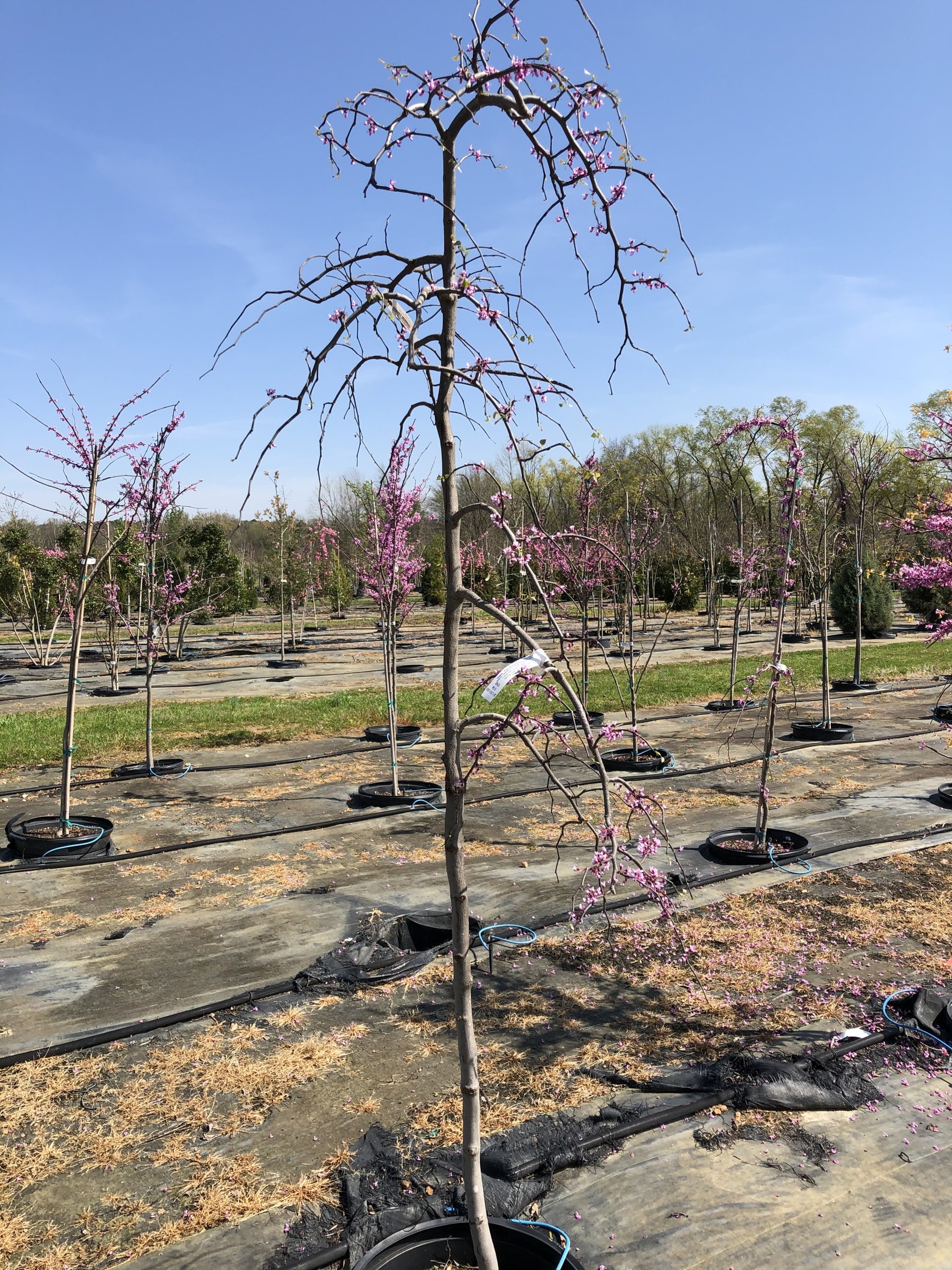
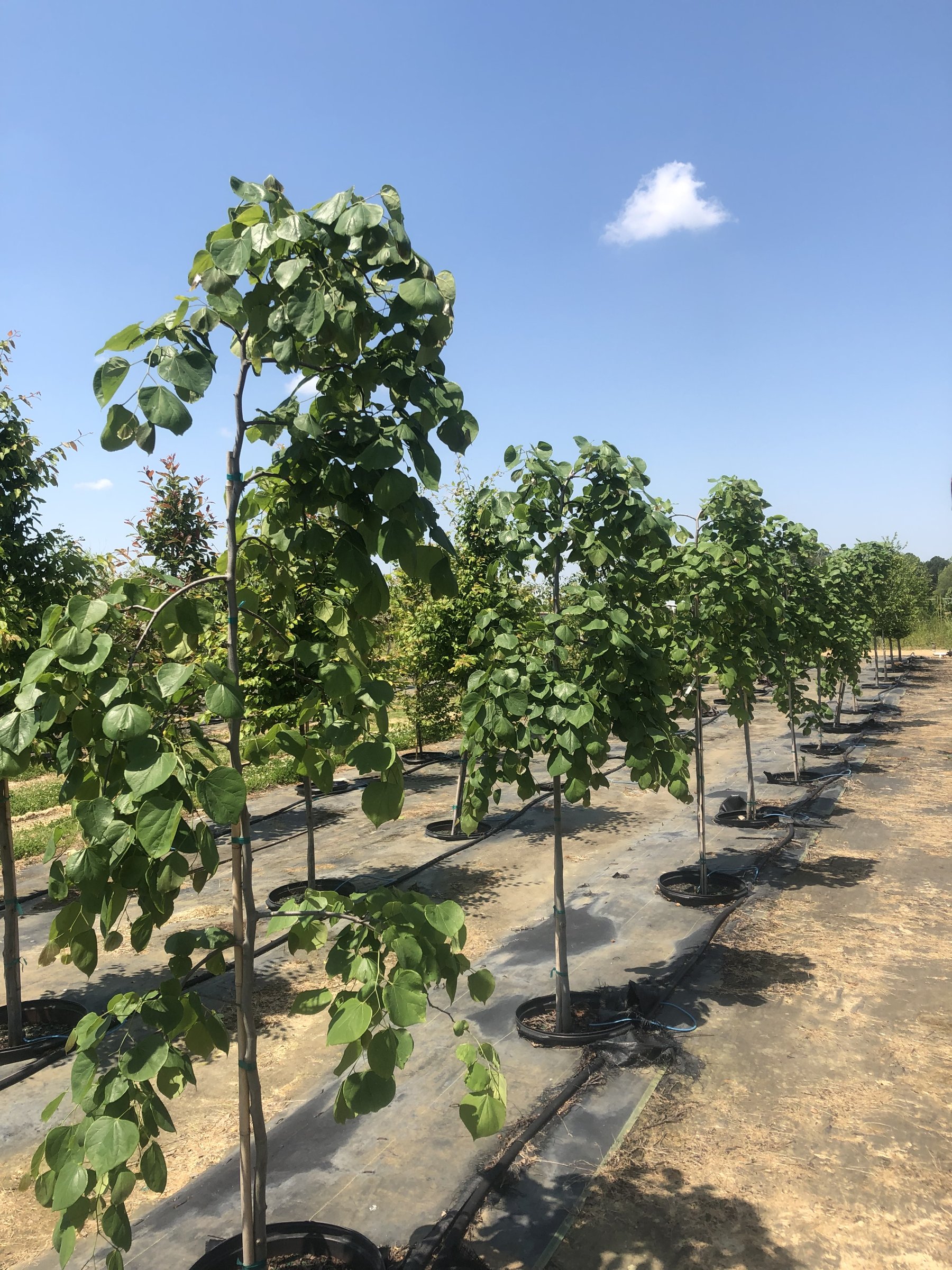
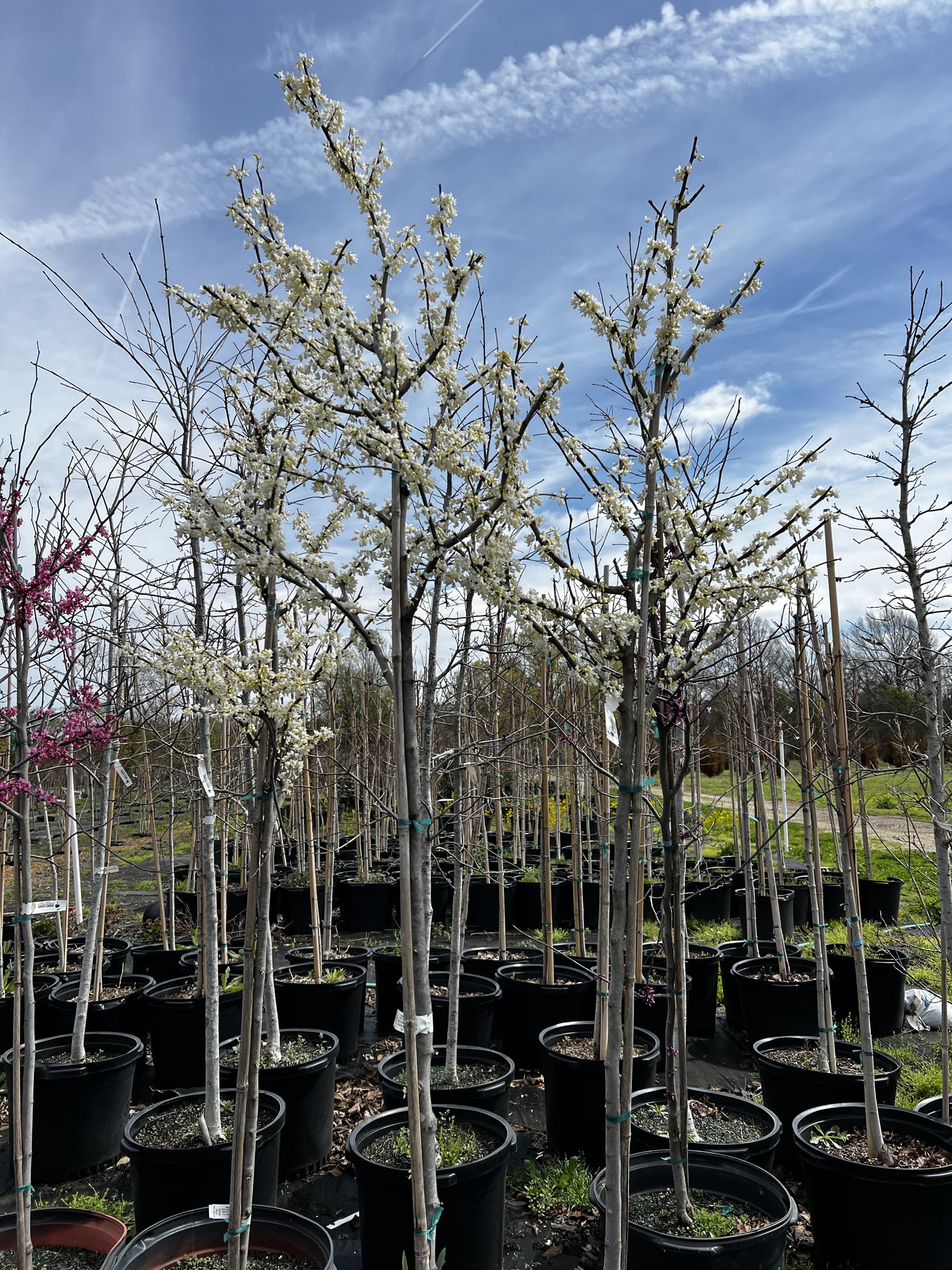
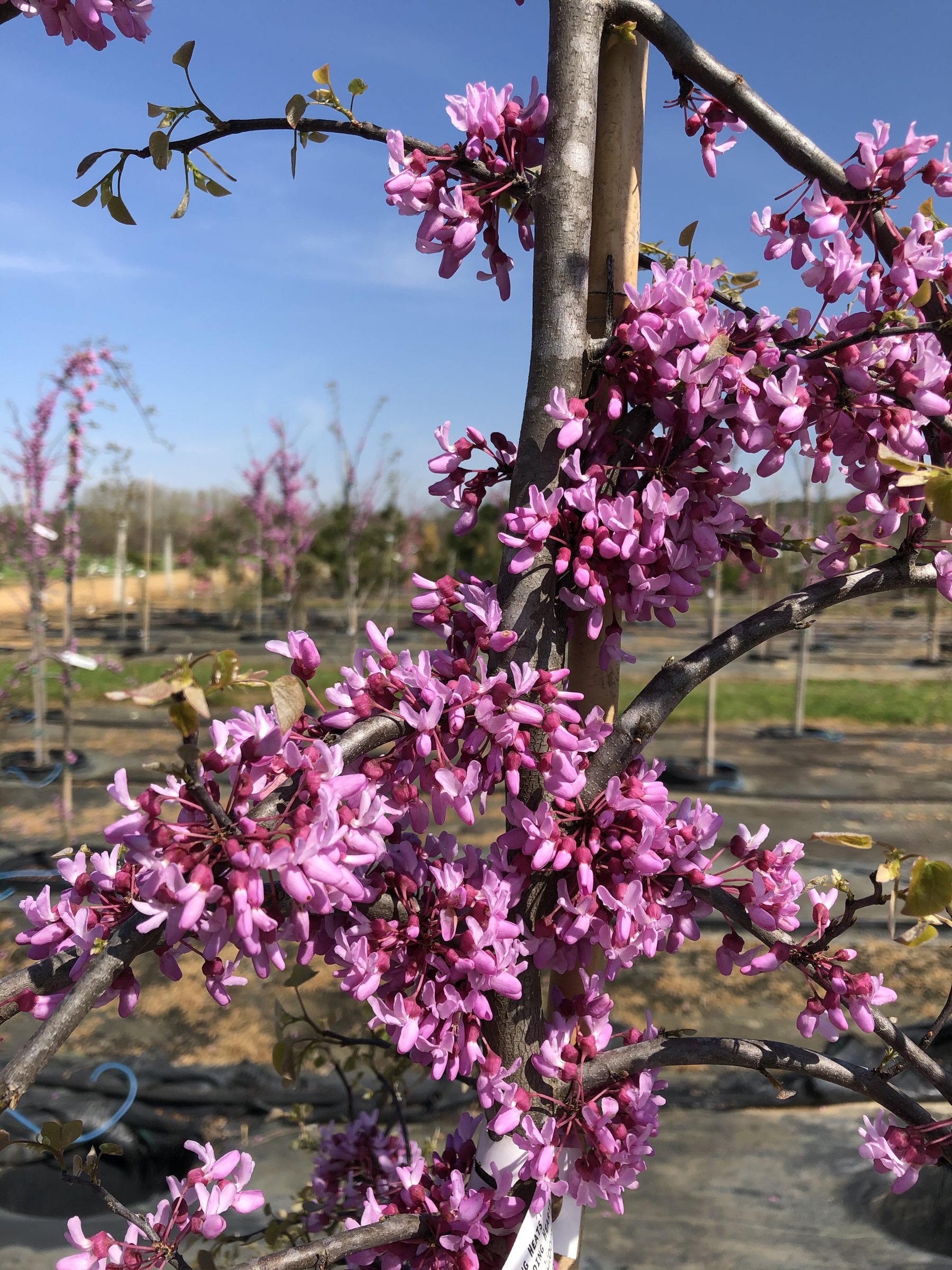
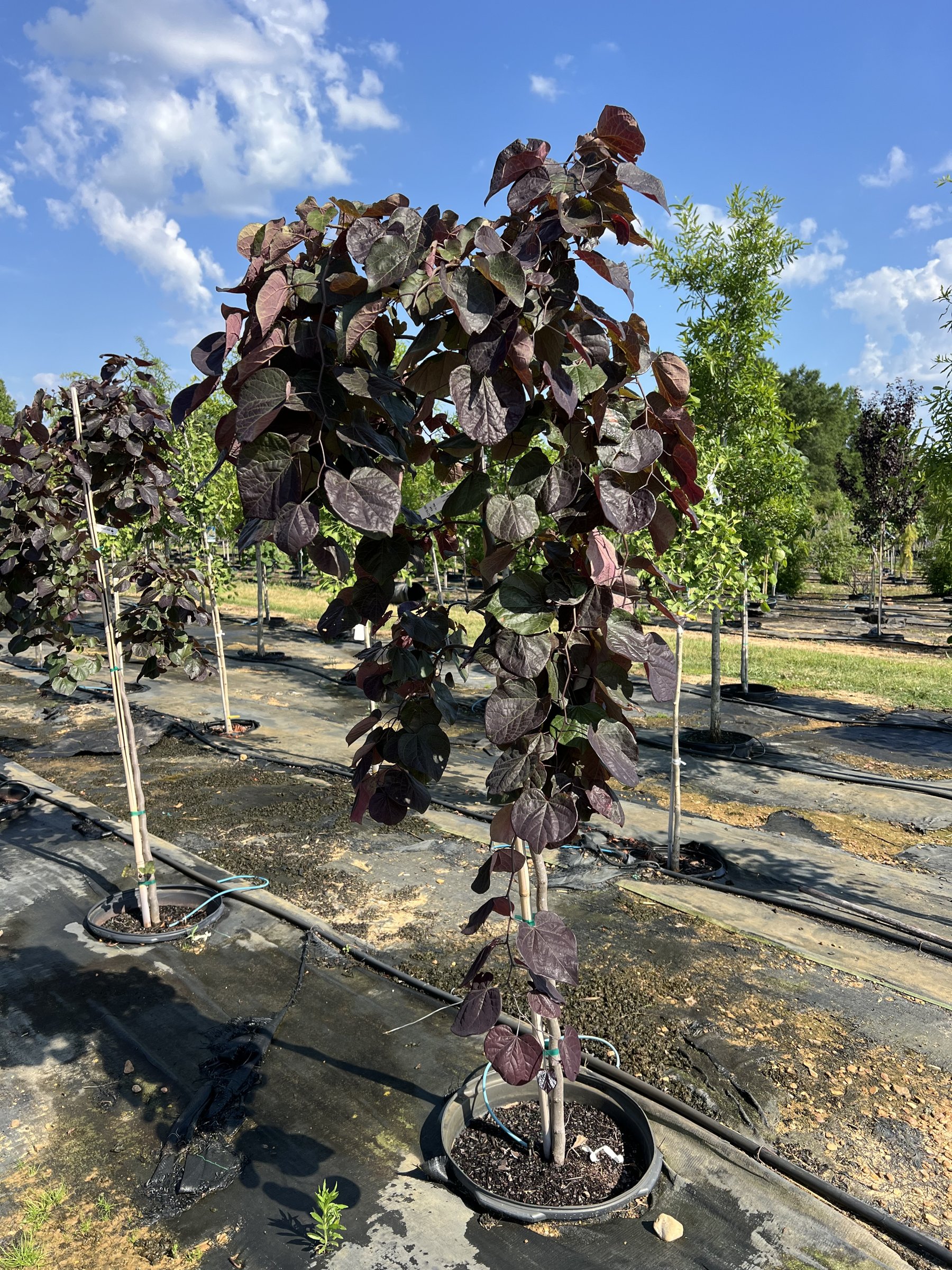
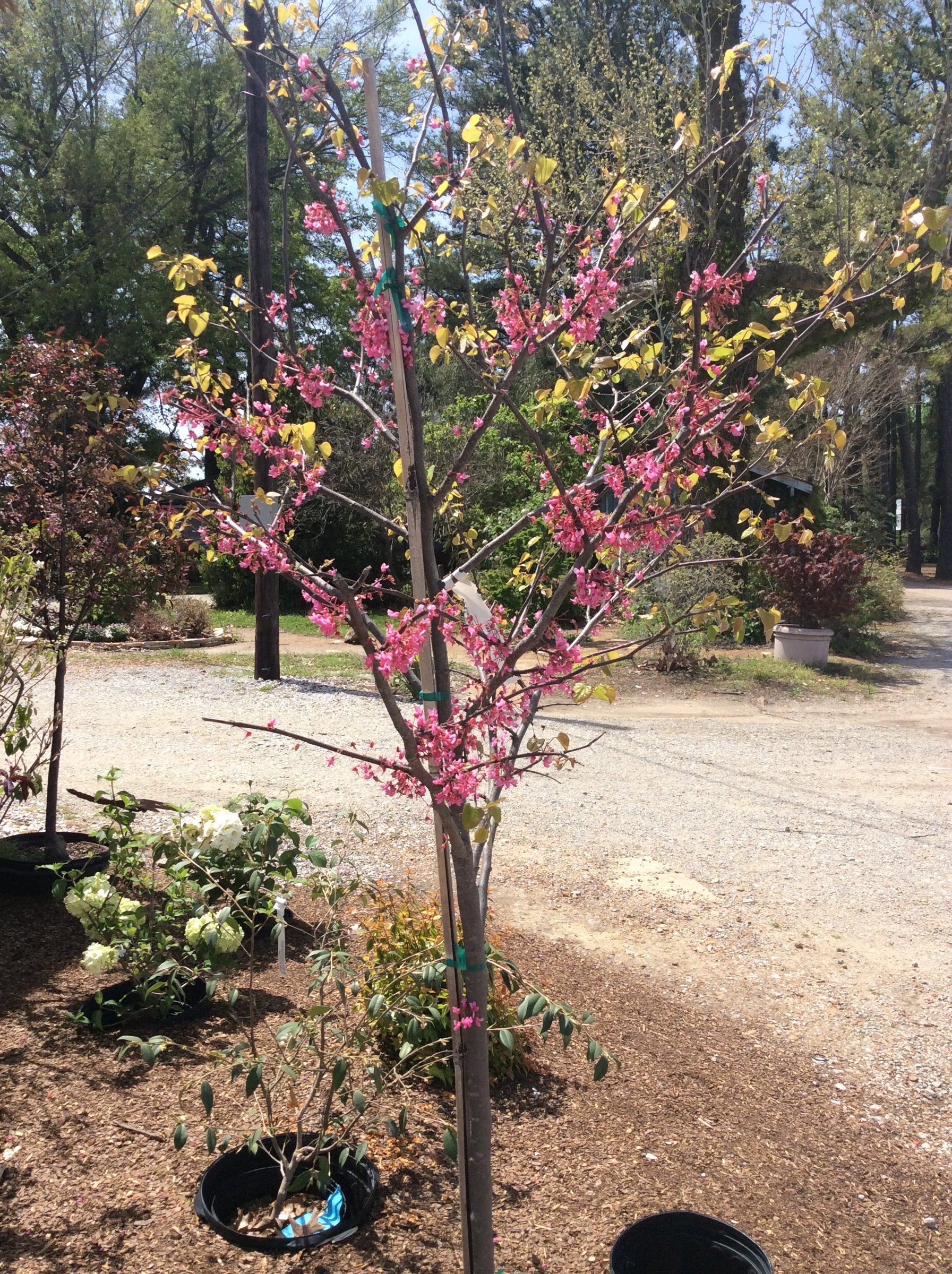
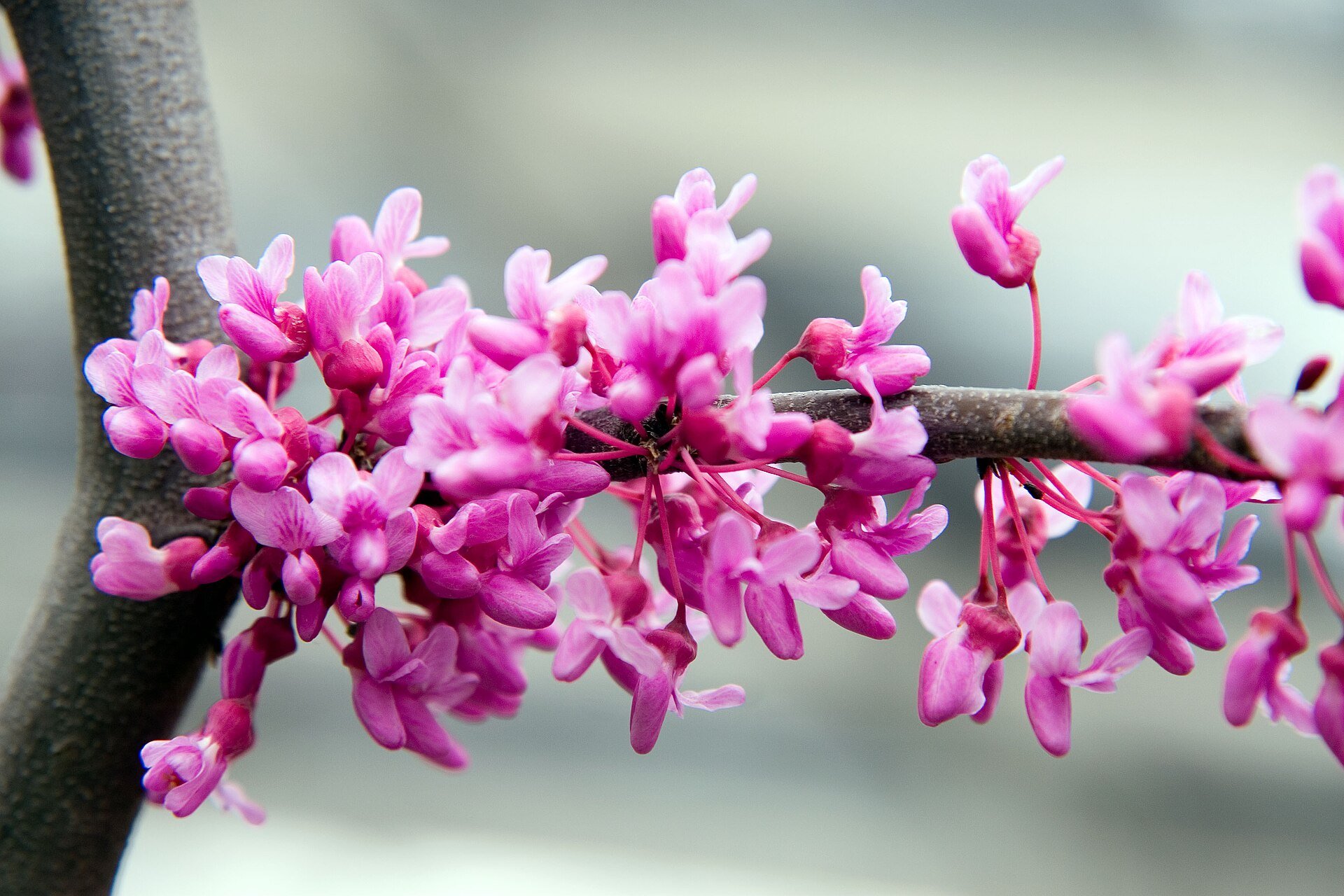
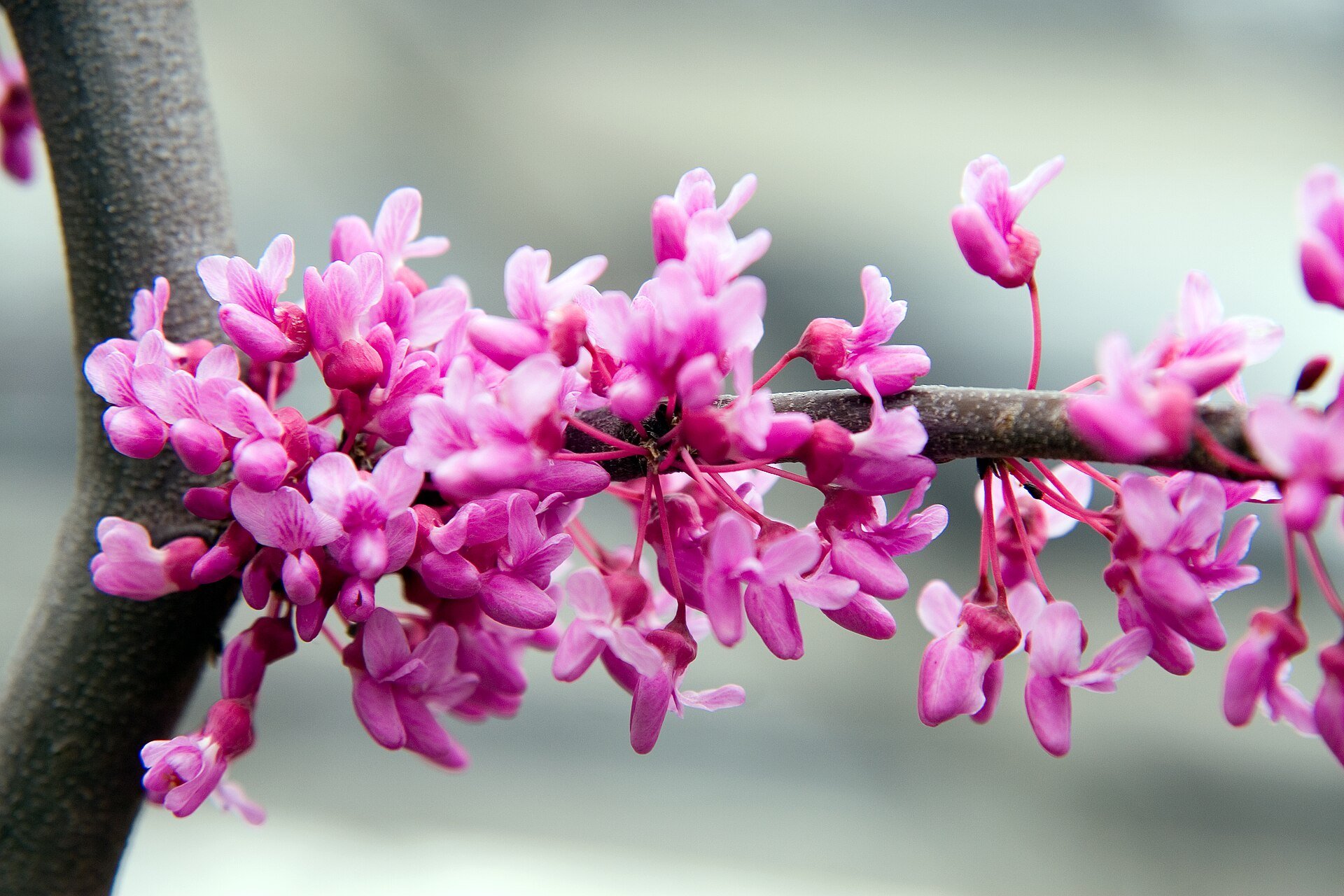
A Texas redbud selection that stays smaller than the eastern species at 12 to 18 feet tall and 15 to 20 feet wide, with a multi-trunked, rounded frame. Royal purple pea-like flowers about half an inch wide open in clusters of four to ten along the bare branches in March and April, and the leaves that follow are glossy, leathery and blue-green, 3 to 5 inches wide, turning gold-yellow in fall. Bark becomes light to dark gray and alligator-like with age. It needs full sun to partial shade, a neutral soil and good drainage, and is more heat and drought adapted than typical eastern redbuds. Bees, specialized bees and songbirds use it. Watch for Japanese beetles, leafhoppers, webworms, canker and deer browsing.
- Full Sun
- Grows to 18 ft tall and 20 ft wide
- Blooms in spring
- Hardy in USDA zones 6a-8b
- Deciduous foliage
- Native plant
Plant description
A Texas redbud selection that stays smaller than the eastern species at 12 to 18 feet tall and 15 to 20 feet wide, with a multi-trunked, rounded frame. Royal purple pea-like flowers about half an inch wide open in clusters of four to ten along the bare branches in March and April, and the leaves that follow are glossy, leathery and blue-green, 3 to 5 inches wide, turning gold-yellow in fall. Bark becomes light to dark gray and alligator-like with age. It needs full sun to partial shade, a neutral soil and good drainage, and is more heat and drought adapted than typical eastern redbuds. Bees, specialized bees and songbirds use it. Watch for Japanese beetles, leafhoppers, webworms, canker and deer browsing.
- Flowers
- Royal purple pea-like flowers about half an inch wide, carried in clusters of four to ten along the bare branches in March and April.
- Foliage
- Glossy, leathery, blue-green heart-shaped leaves 3 to 5 inches wide that turn gold-yellow in fall.
- Native range
- United States, discovered in Oklahoma