Plant: Sawtooth Oak Tree
Sawtooth Oak Tree · Quercus acutissima
Size: 15 gal
Light
Bloom
Mature size
More about this plant
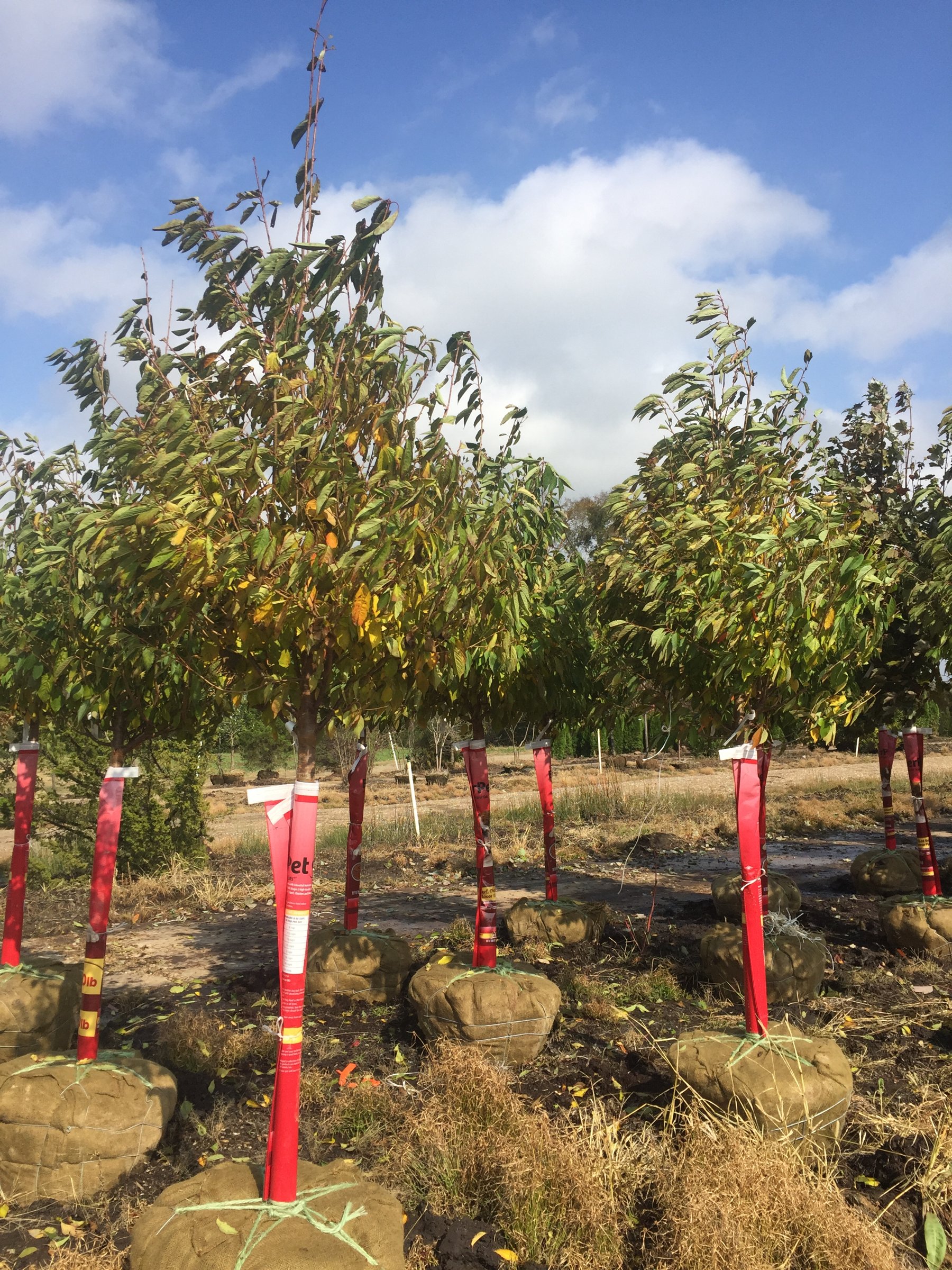
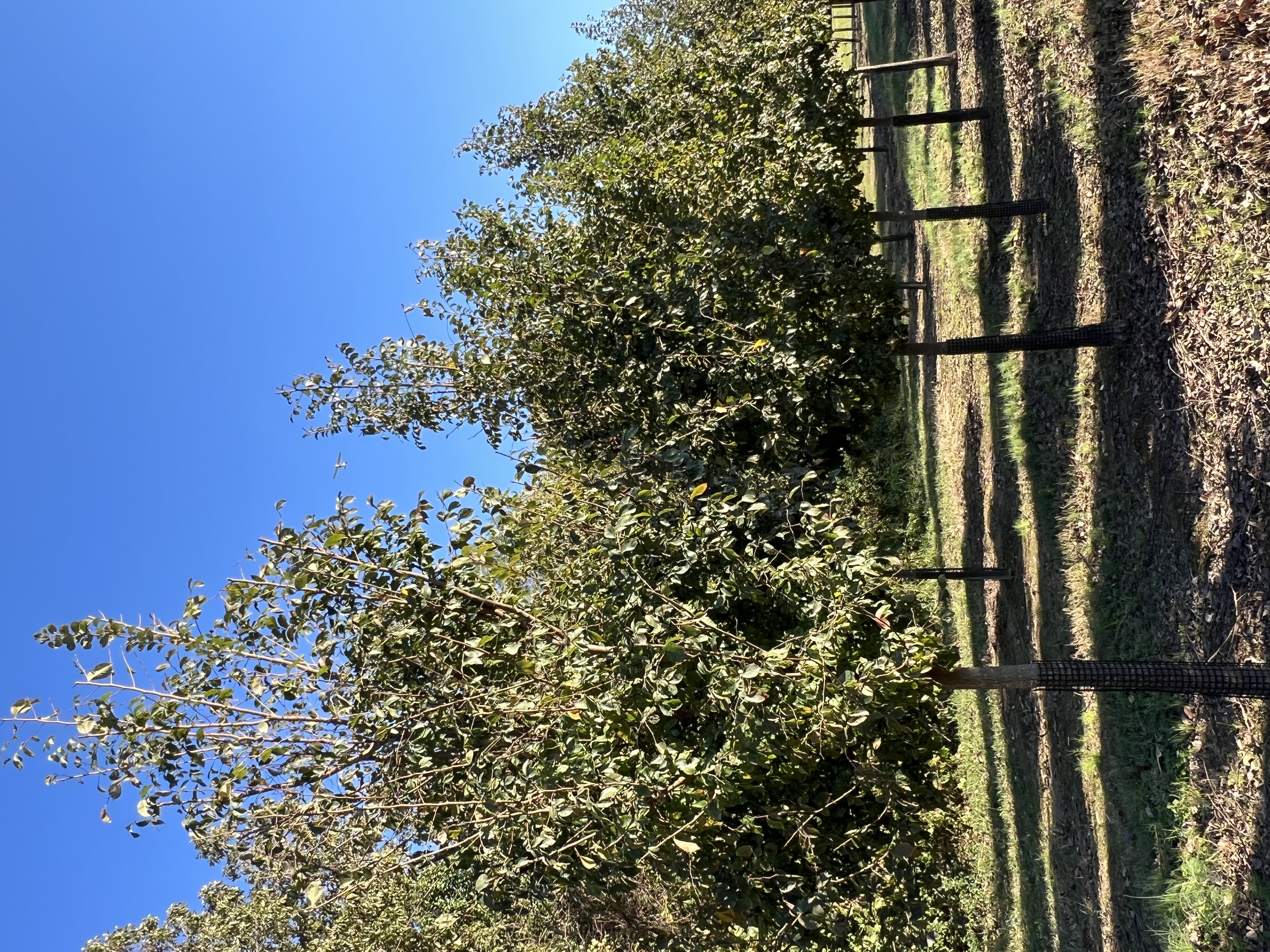
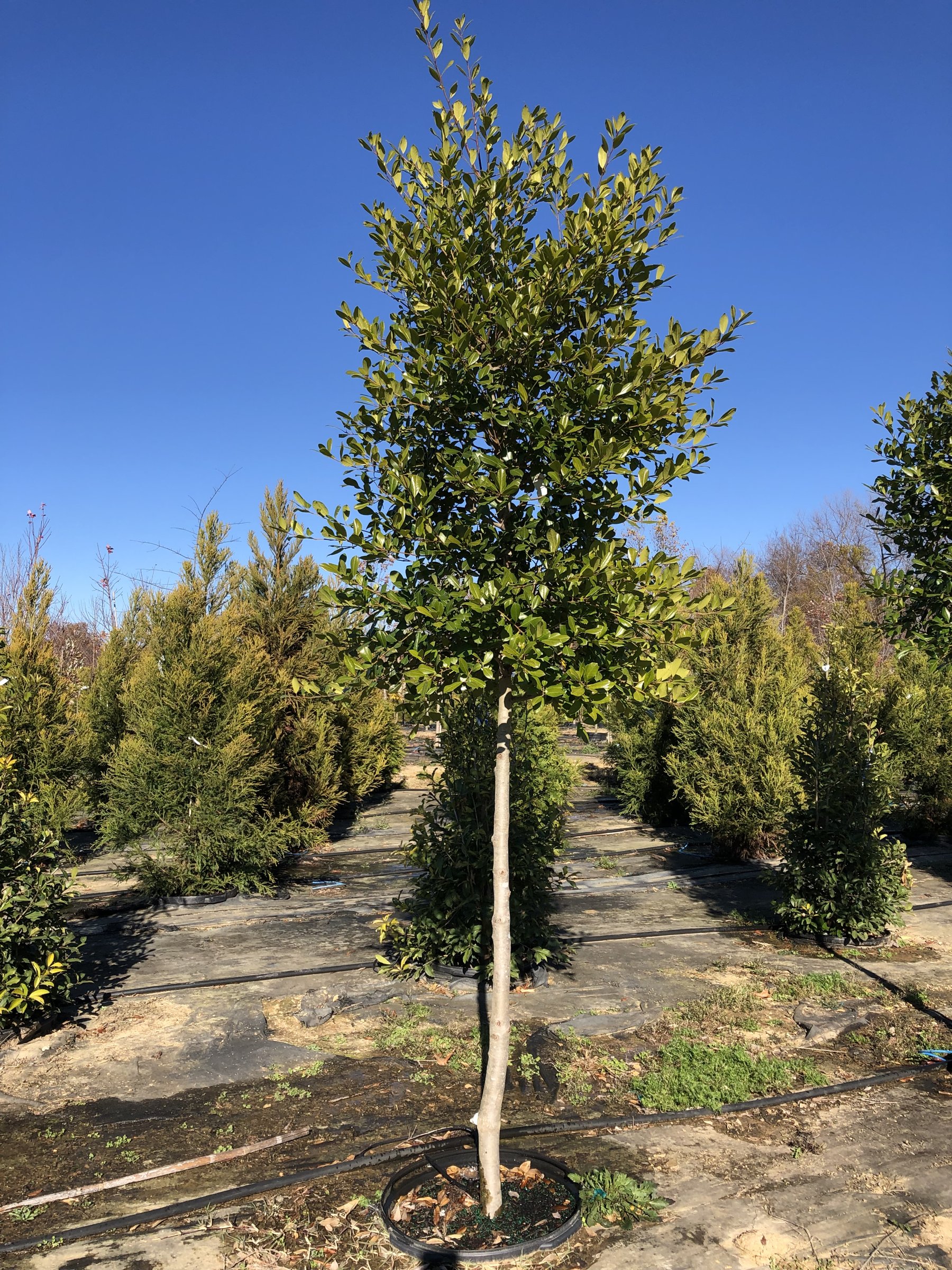
Sawtooth oak is a medium sized deciduous tree from Asia, 30 to 60 feet tall and 30 to 50 feet wide, pyramidal when young and broadly rounded with age. Its glossy dark green lance shaped leaves carry bristle tipped teeth on each vein and turn gold to brown, often hanging into winter, and the bark becomes gray to black with corky ridges. Large bird nest cupped acorns ripen in fall in heavy crops. It takes full sun, acid soils, drought, heat, humidity, compaction and wind. Note that NC State no longer recommends it in the United States because of its invasive tendencies in the eastern states, and that acorns and leaves are mildly poisonous if eaten.
- Full Sun
- Grows to 60 ft tall and 50 ft wide
- Blooms in spring
- Hardy in USDA zones 6-9
- Deciduous foliage
Plant description
Sawtooth oak is a medium sized deciduous tree from Asia, 30 to 60 feet tall and 30 to 50 feet wide, pyramidal when young and broadly rounded with age. Its glossy dark green lance shaped leaves carry bristle tipped teeth on each vein and turn gold to brown, often hanging into winter, and the bark becomes gray to black with corky ridges. Large bird nest cupped acorns ripen in fall in heavy crops. It takes full sun, acid soils, drought, heat, humidity, compaction and wind. Note that NC State no longer recommends it in the United States because of its invasive tendencies in the eastern states, and that acorns and leaves are mildly poisonous if eaten.
- Foliage
- Glossy dark green lance shaped leaves 4 to 7.5 inches long with bristle tipped marginal teeth at the end of each parallel vein, turning gold to brown and often persisting into winter.
- Fruit
- Large oval acorns about an inch long, the cup covering roughly two thirds of the nut with long spreading recurved scales that resemble a bird's nest. Bitter, abundant on mature trees and a heavy litter producer.
- Bark & stems
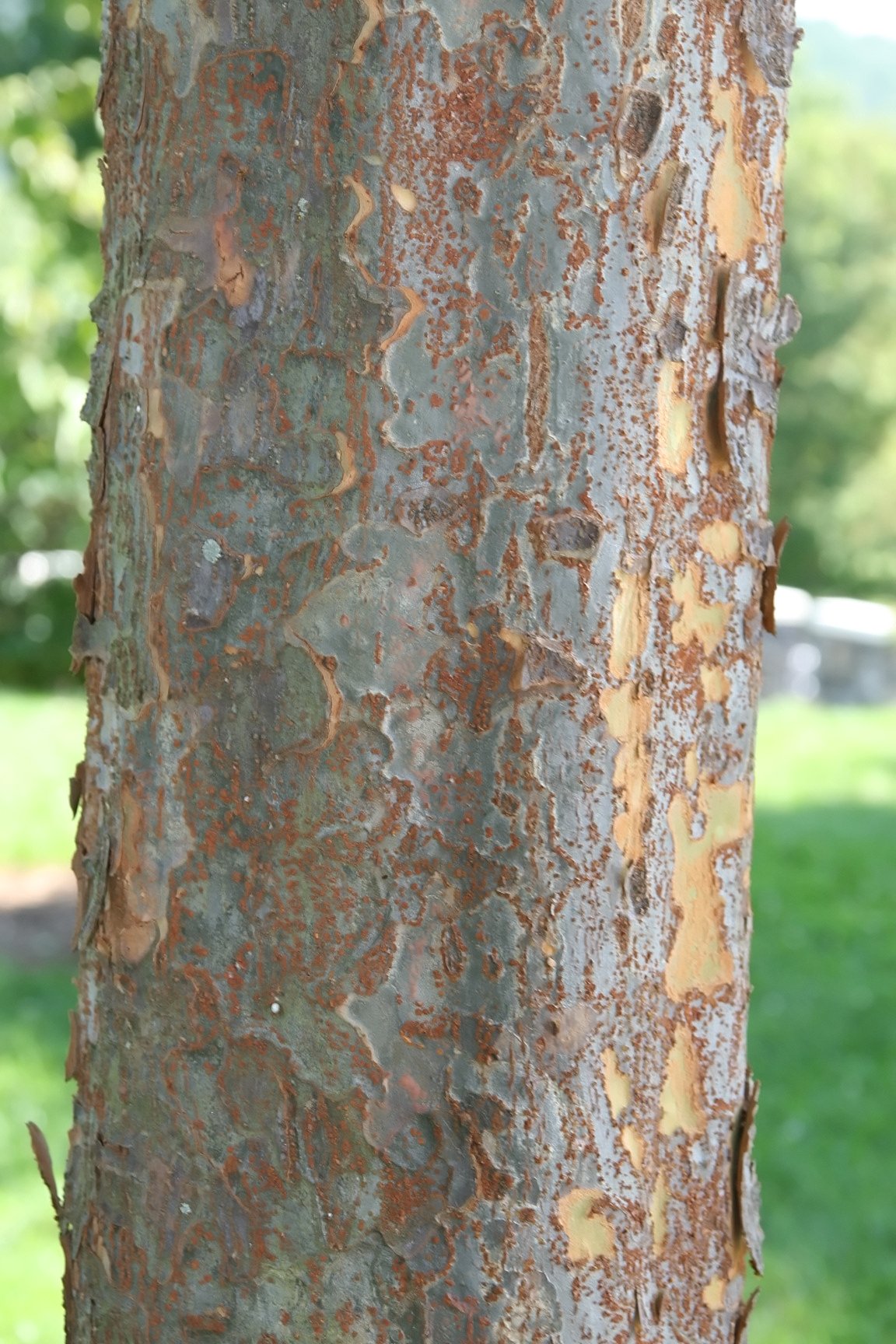
- Gray to black bark with corky ridges and furrows with age; twigs red to gray brown and smooth.
- Native range
- Himalaya to China, Korea, Central and Southern Japan