Plant: Lil' Kim® Rose of Sharon
Althea · Hibiscus syriacus 'Lil Kim'
Size: 3 gal
Light
Bloom
Mature size
More about this plant
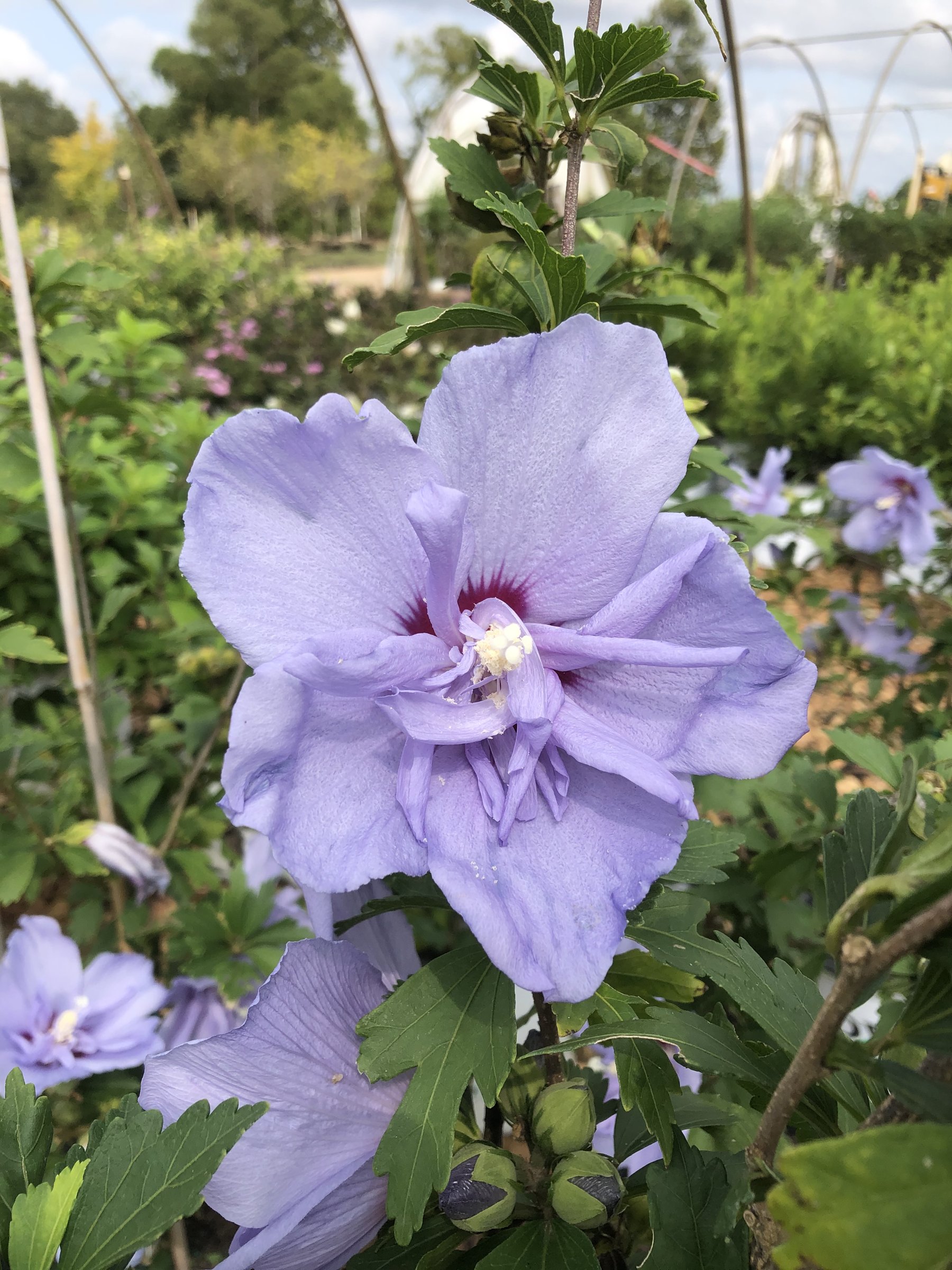
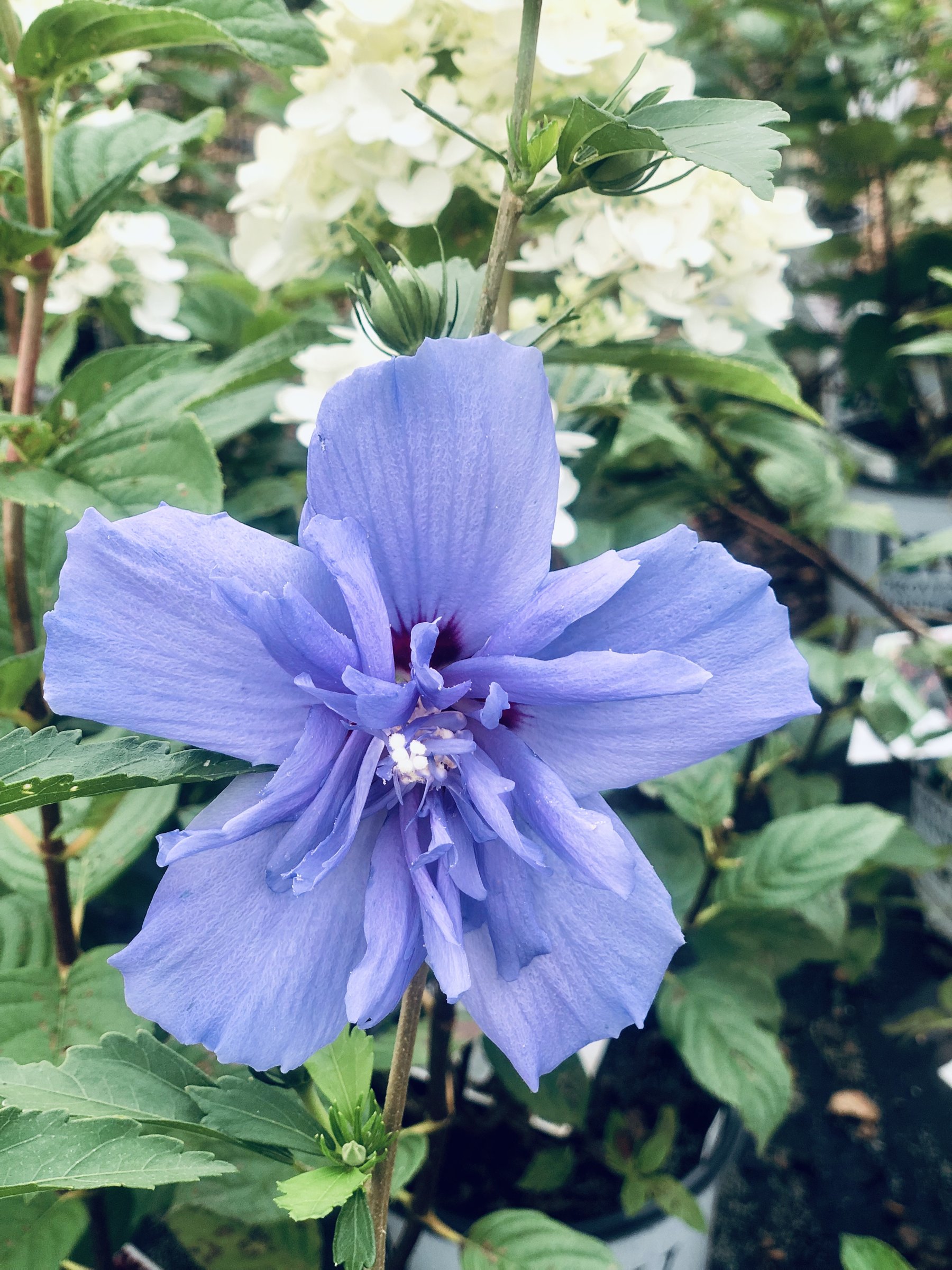
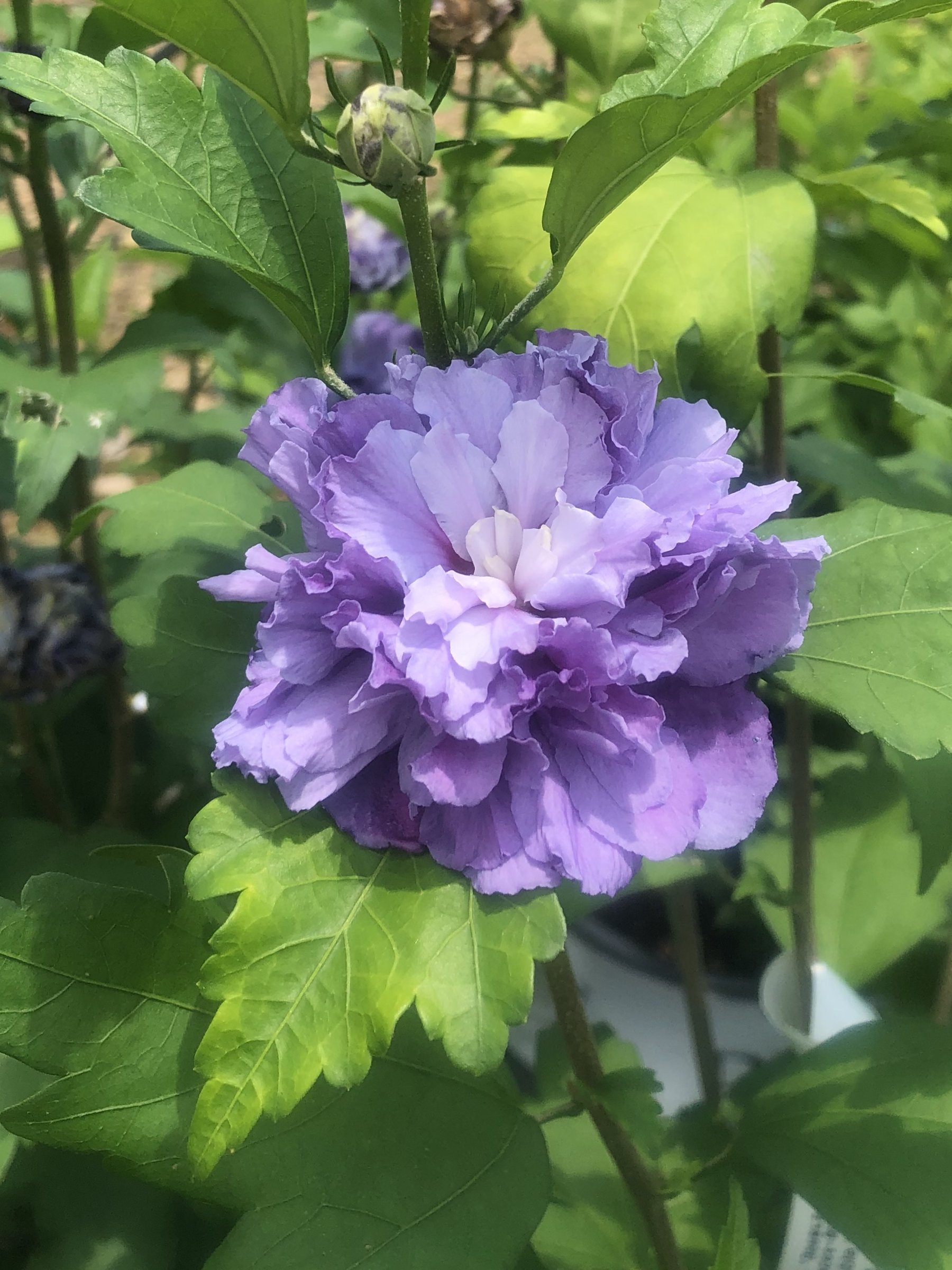
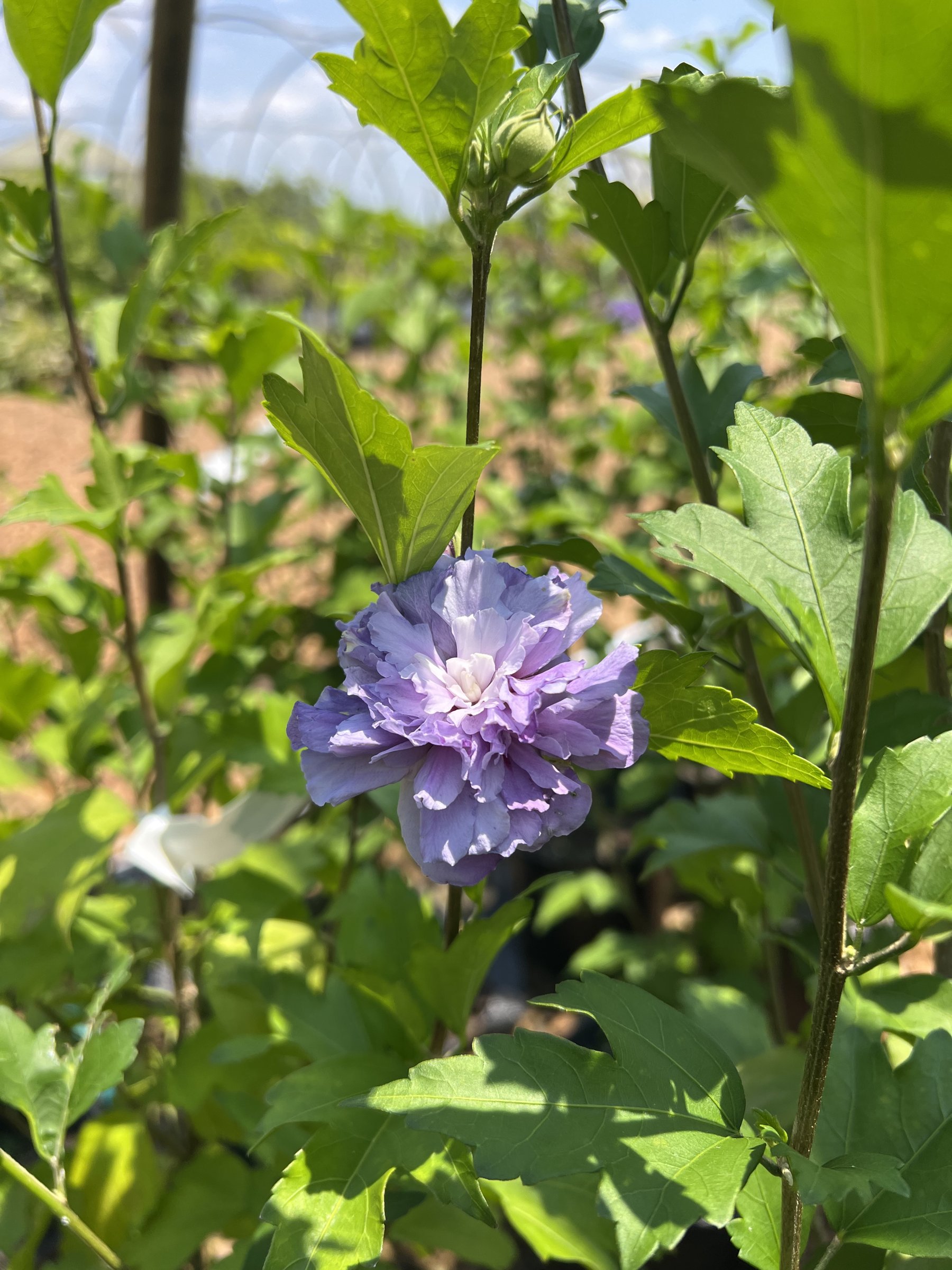
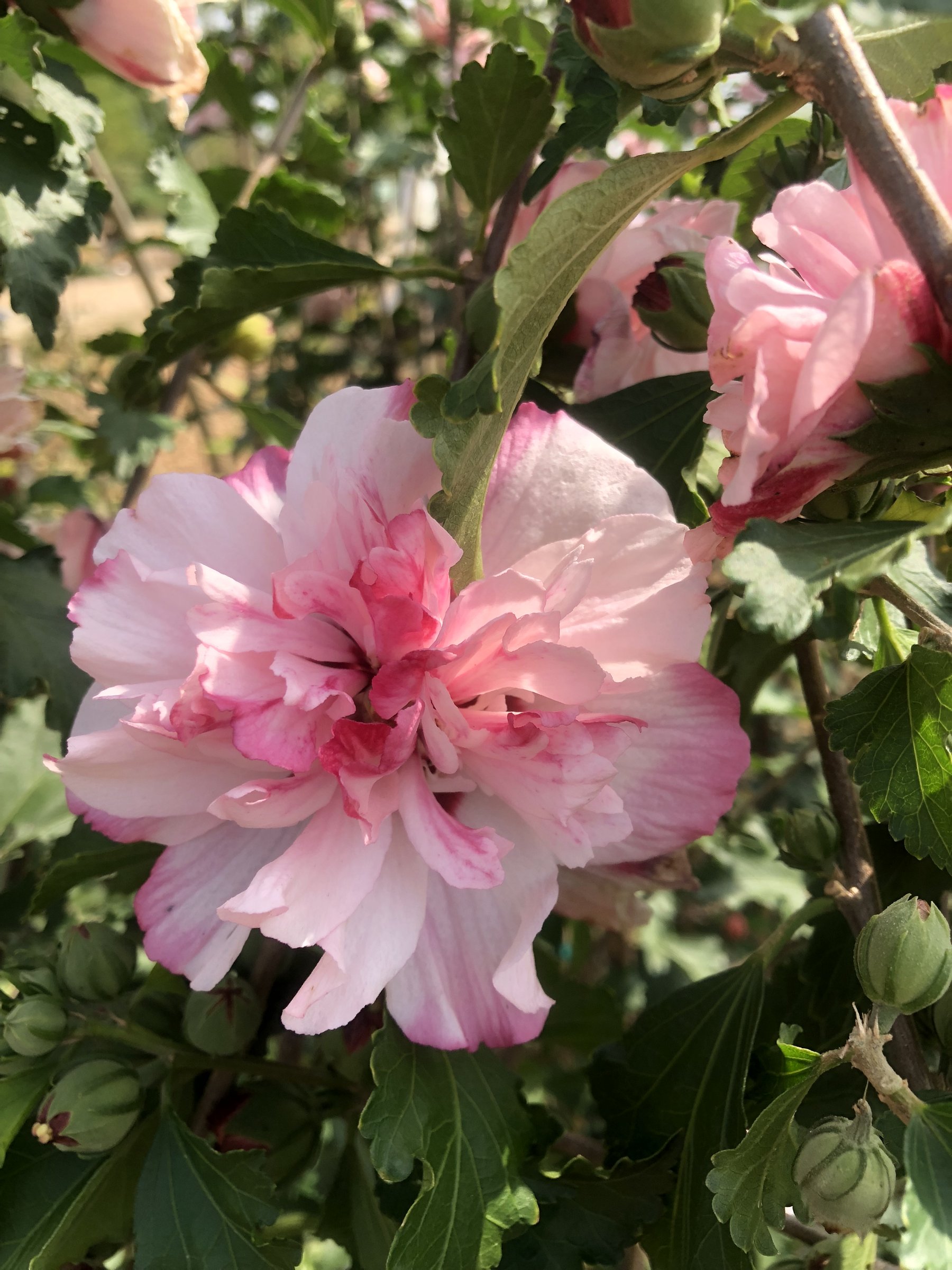
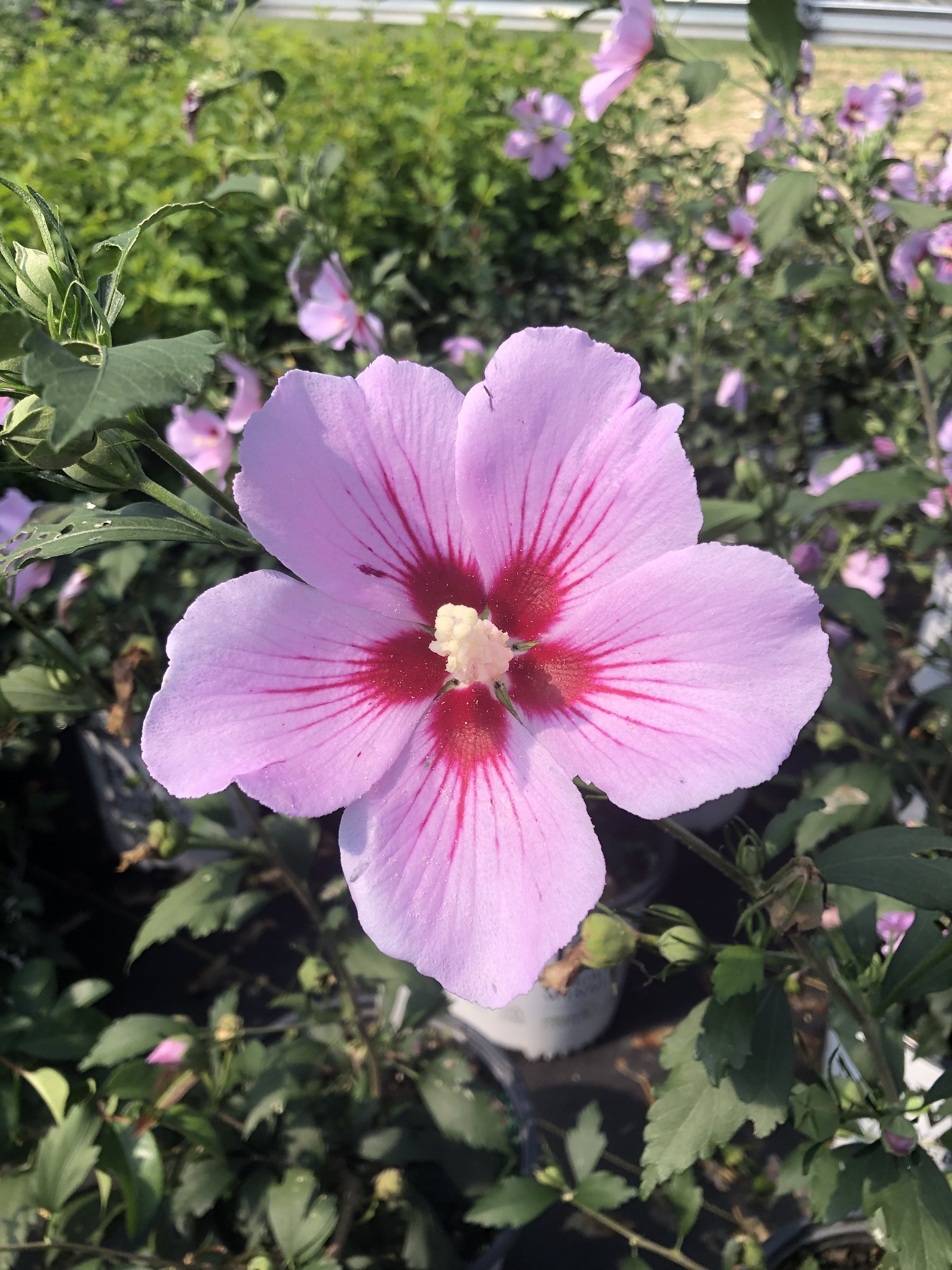
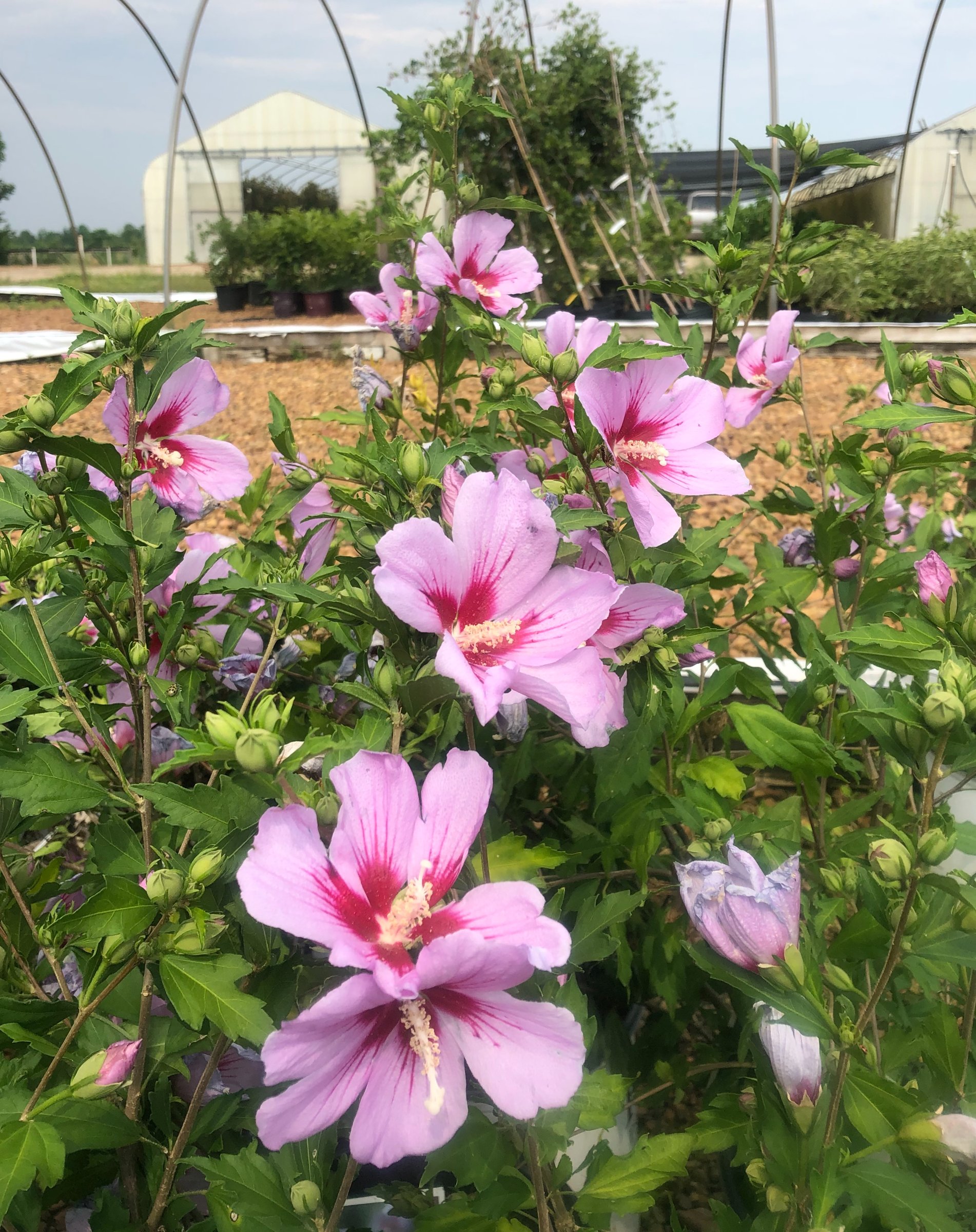
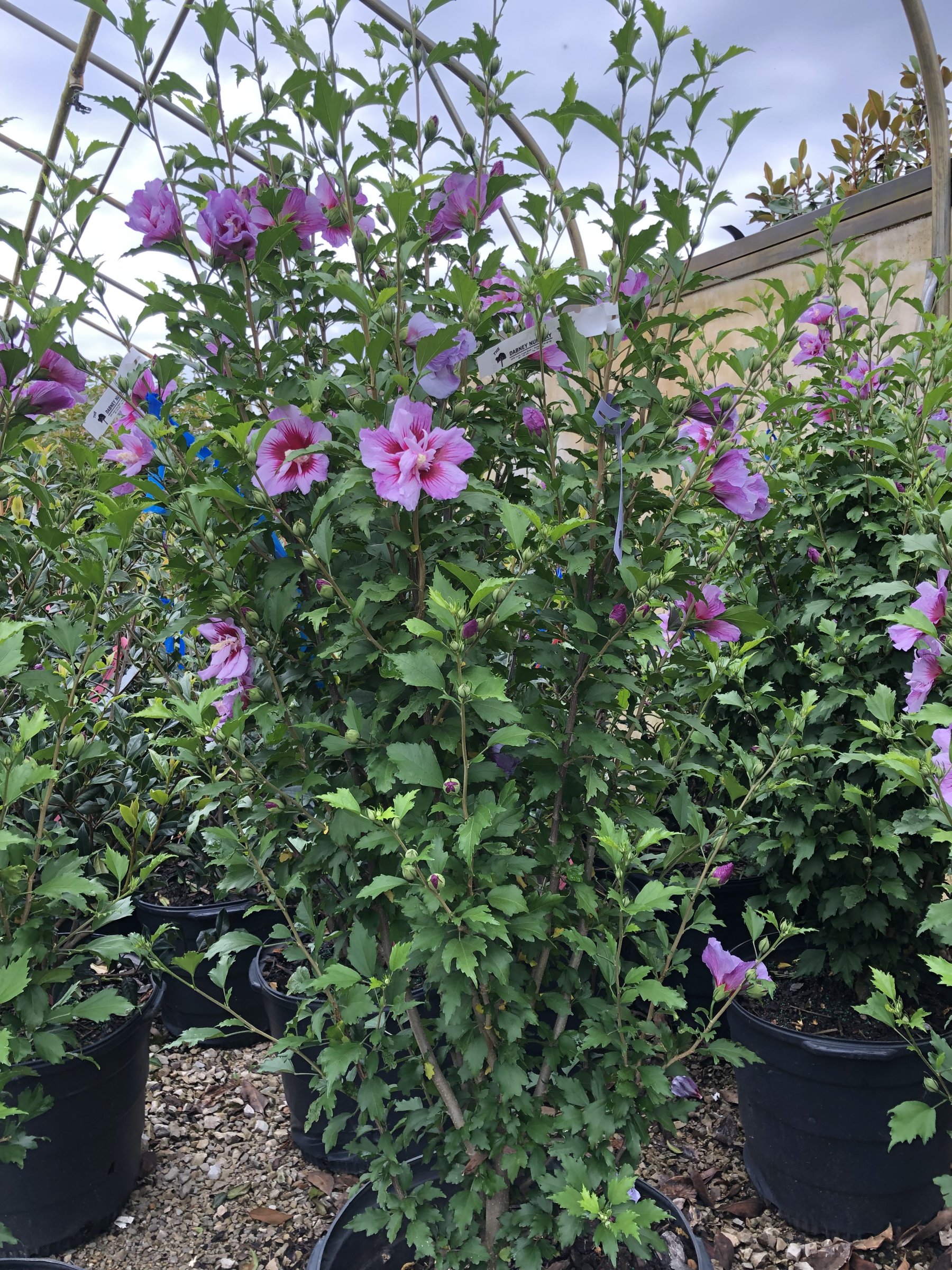
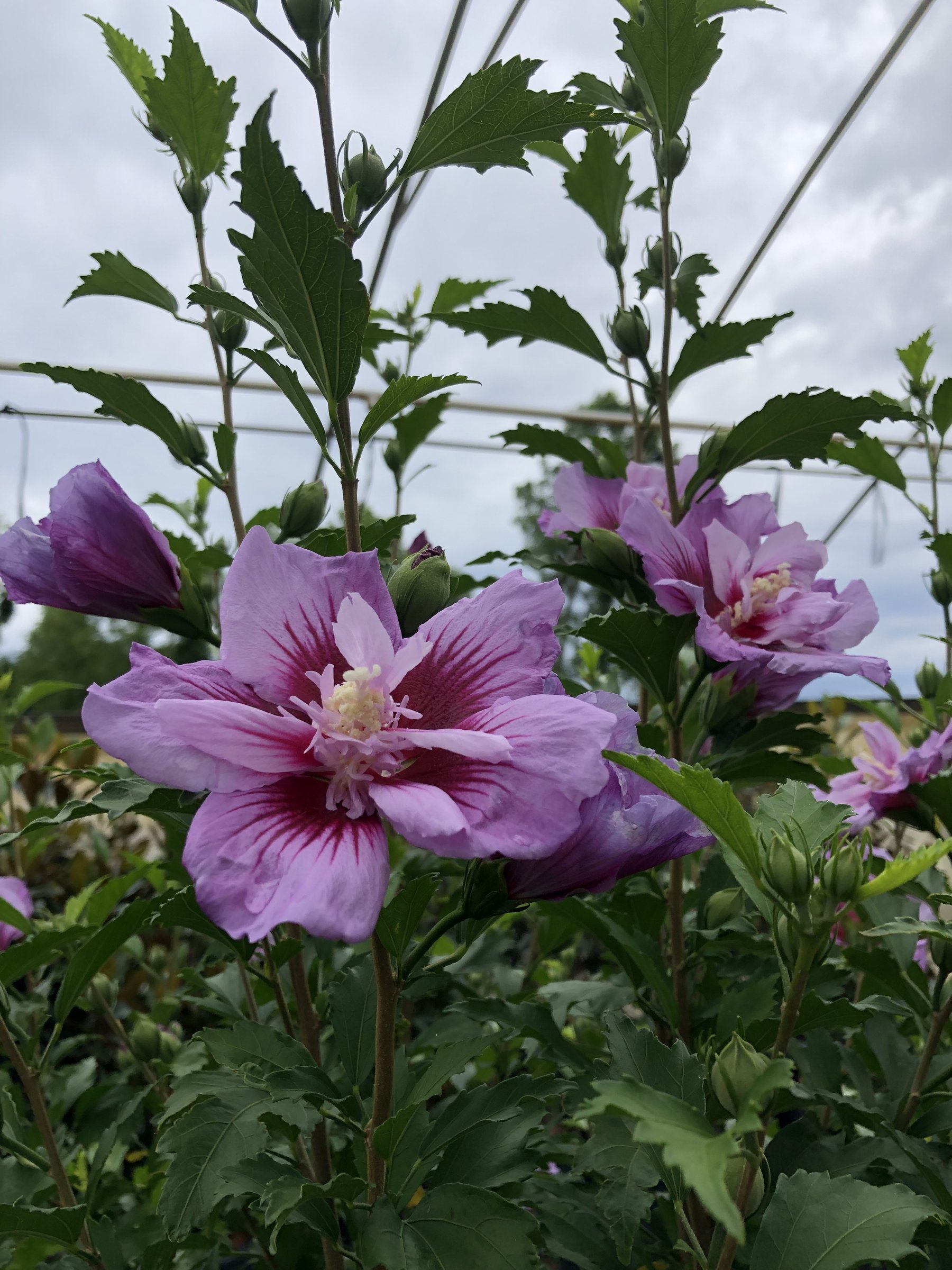
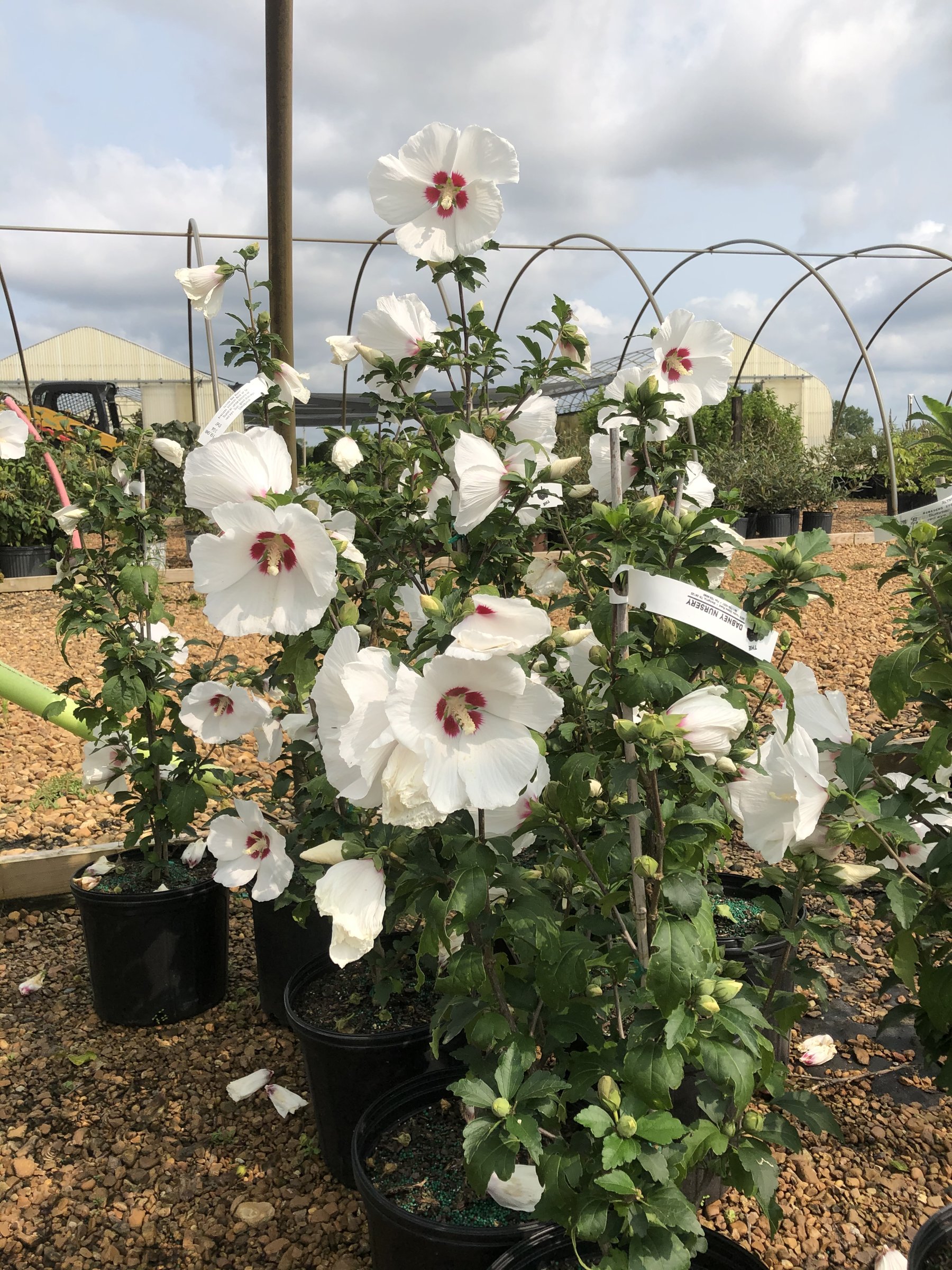
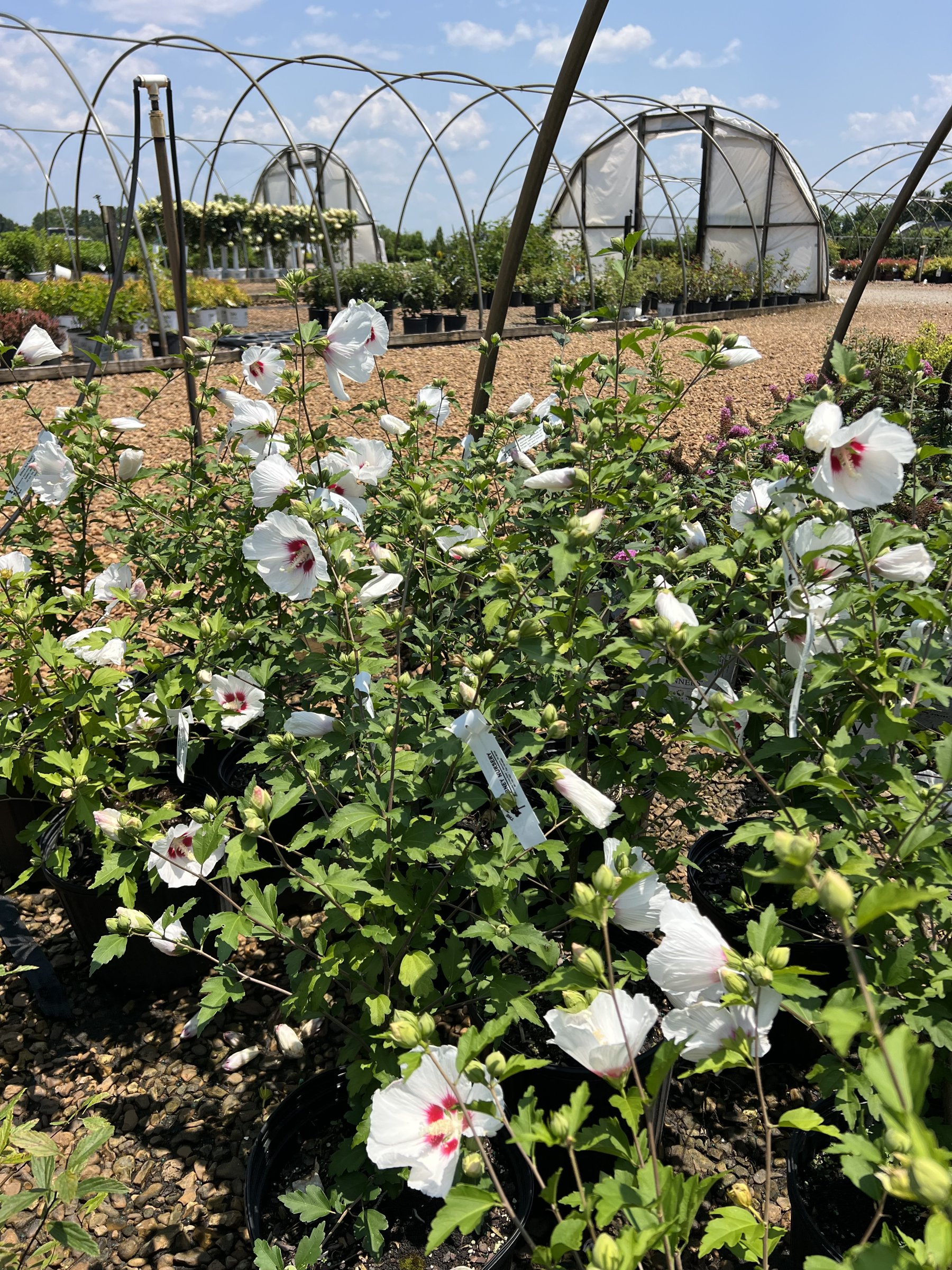
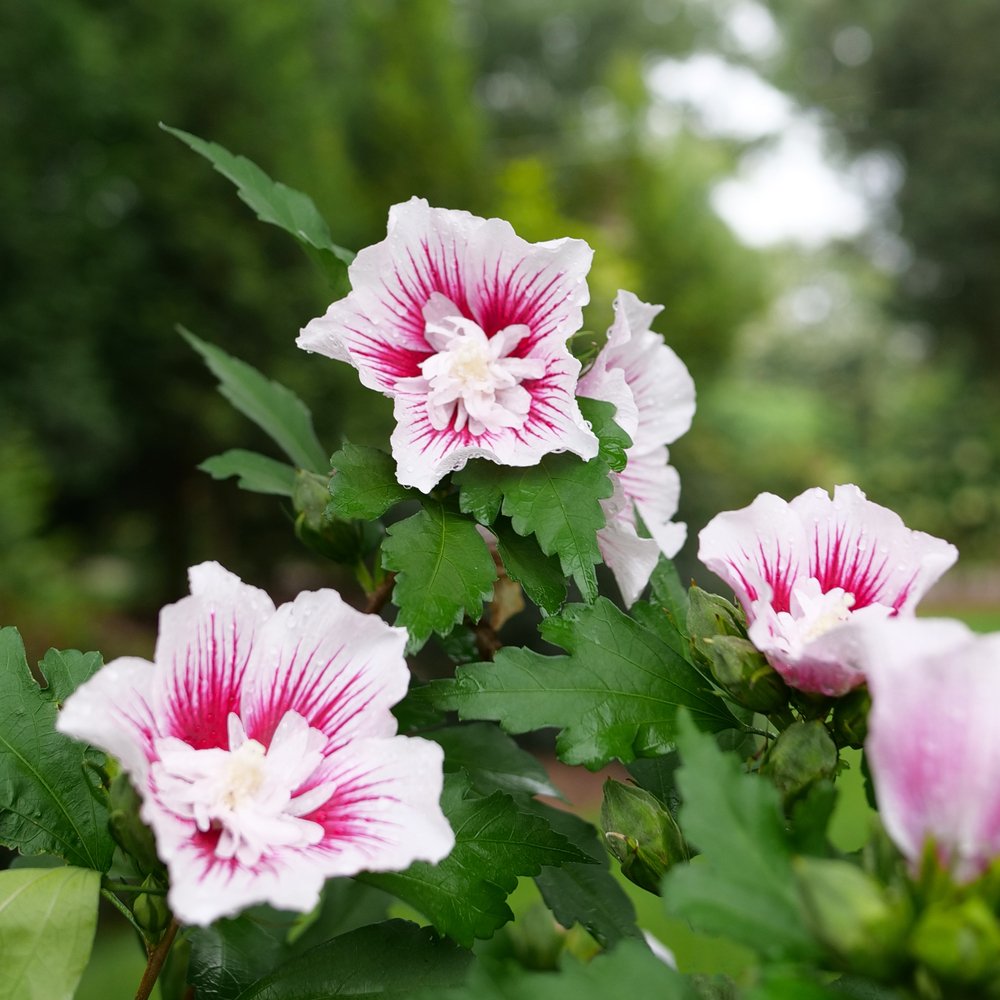
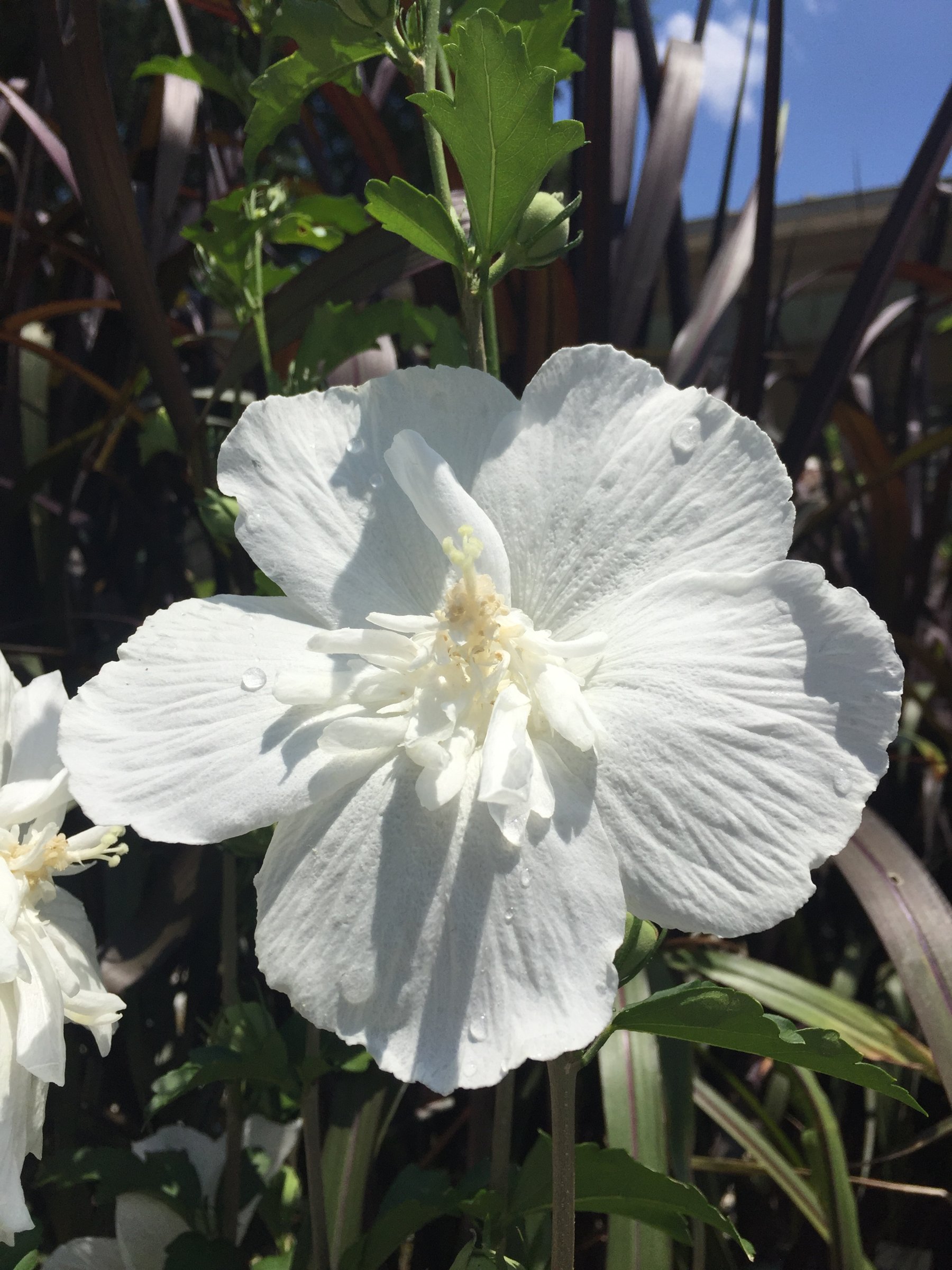
A dwarf rose of Sharon roughly half the size of conventional cultivars, upright and deciduous at 3 to 4 feet tall and wide. Every stem is packed with flower buds that open to white flowers with a showy red eye, giving continuous bloom through early, mid and late summer above green three lobed leaves. It is easy to grow in full sun on well drained soil with average water, avoiding extremely wet or dry conditions, and it tolerates heat, drought and salt while attracting butterflies and hummingbirds. Its small size suits containers, low hedges and specimen use in tight spaces. NCSU records the species as non toxic to cats, dogs and horses and as weedy or invasive in some states.
- Full Sun
- Grows to 4 ft tall and 4 ft wide
- Blooms in summer
- Hardy in USDA zones 5-9
- Deciduous foliage
Plant description
A dwarf rose of Sharon roughly half the size of conventional cultivars, upright and deciduous at 3 to 4 feet tall and wide. Every stem is packed with flower buds that open to white flowers with a showy red eye, giving continuous bloom through early, mid and late summer above green three lobed leaves. It is easy to grow in full sun on well drained soil with average water, avoiding extremely wet or dry conditions, and it tolerates heat, drought and salt while attracting butterflies and hummingbirds. Its small size suits containers, low hedges and specimen use in tight spaces. NCSU records the species as non toxic to cats, dogs and horses and as weedy or invasive in some states.
- Flowers
- Each stem is packed with buds that open to white flowers with a showy red eye.
- Foliage
- Leaves are alternate, simple and 3-lobed, 2 to 4 inches long, with coarsely toothed margins.
- Fruit
- A 5-valved dehiscent capsule about 3/4 inch long and wide, brown, persisting through winter.
- Pruning
- Prune in late winter or early spring and apply a shrub fertilizer in early spring.
- Native range
- South China and Taiwan