

Plant: Beautyberry / Callicarpa Americana
Beautyberry · Callicarpa americana
Was $30.00
Size: 3 gal
Light
Bloom
Mature size
More about this plant
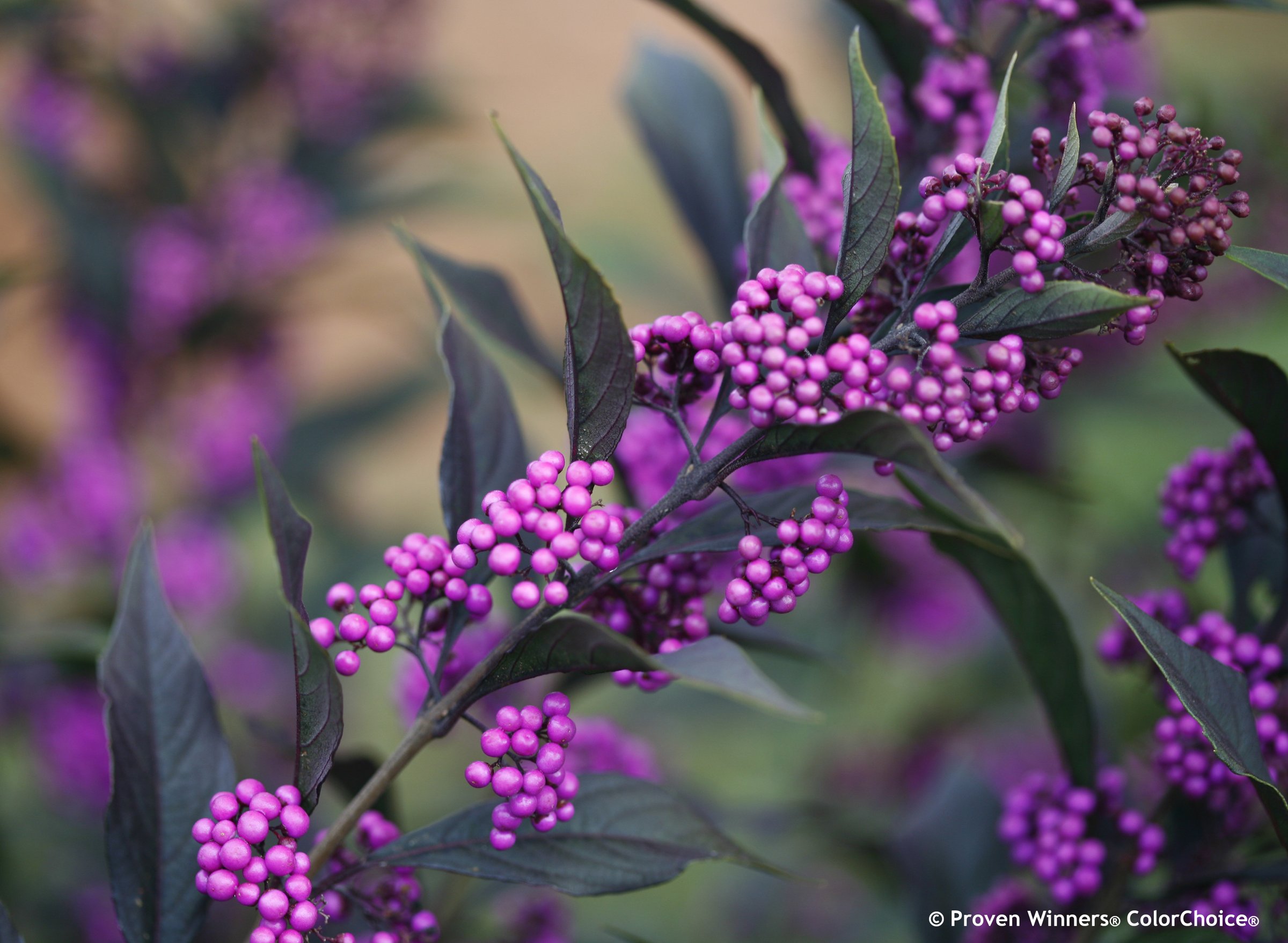
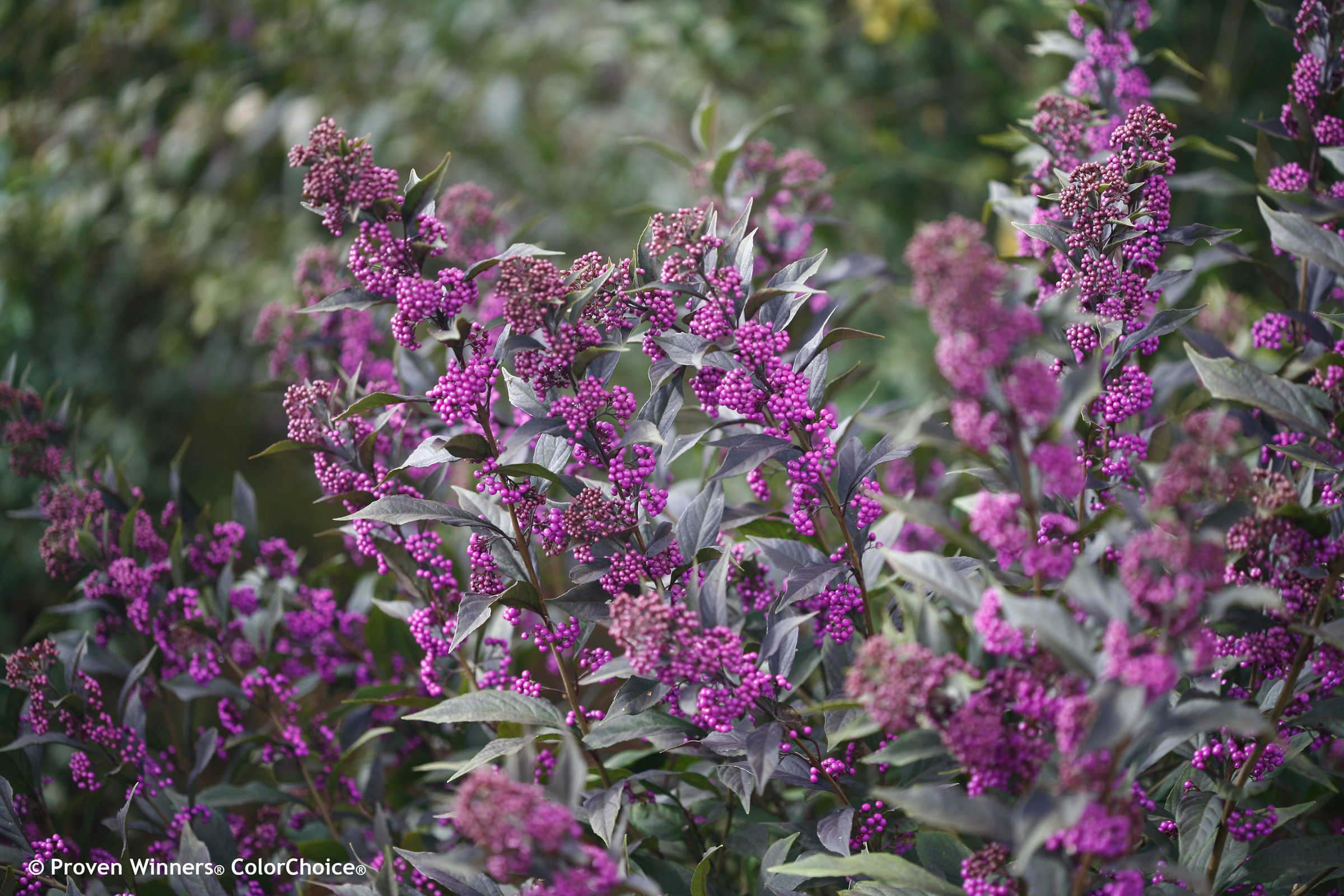
An arching, open native shrub 3 to 8 feet tall with medium green ovate to elliptical leaves that turn pale gold in fall. Small pink to lavender flowers open in cymes where the leaves meet the stem in late spring and early summer, followed by clusters of bluish purple berries that encircle the stems from August into winter. Songbirds including robins, brown thrashers and towhees eat the fruit, and the berries, while insipid, are edible and most often used for jelly. It takes full sun or partial shade in almost any soil, tolerates drought, heat and wet soil, and suits naturalized areas, rain gardens and pollinator plantings.
- Full Sun
- Grows to 8 ft tall and 6 ft wide
- Blooms in spring, summer
- Hardy in USDA zones 6a-10b
- Deciduous foliage
- Native plant
Plant description
An arching, open native shrub 3 to 8 feet tall with medium green ovate to elliptical leaves that turn pale gold in fall. Small pink to lavender flowers open in cymes where the leaves meet the stem in late spring and early summer, followed by clusters of bluish purple berries that encircle the stems from August into winter. Songbirds including robins, brown thrashers and towhees eat the fruit, and the berries, while insipid, are edible and most often used for jelly. It takes full sun or partial shade in almost any soil, tolerates drought, heat and wet soil, and suits naturalized areas, rain gardens and pollinator plantings.
- Flowers
- Small flowers emerge in cymes in late spring to early summer on new growth where the leaves meet the stem, appearing to surround the branch.
- Foliage
- Medium green simple leaves, ovate to elliptical with pointed or blunt tips, tapered bases and saw toothed margins, usually 3.5 to 6 inches long and about half as wide, woolly on the undersides.
- Fruit
- Clusters of small bluish to purplish berries form a whorl encircling the stems, each berry about a quarter inch with 2 to 4 seeds, ripening August to October and often persisting through winter.
- Bark & stems
- Long, slender, arching stems that may be rounded to four sided, gray to reddish, covered with fine hairs.
- Native range
- Central and Southeastern United States, Bermuda, and Cuba