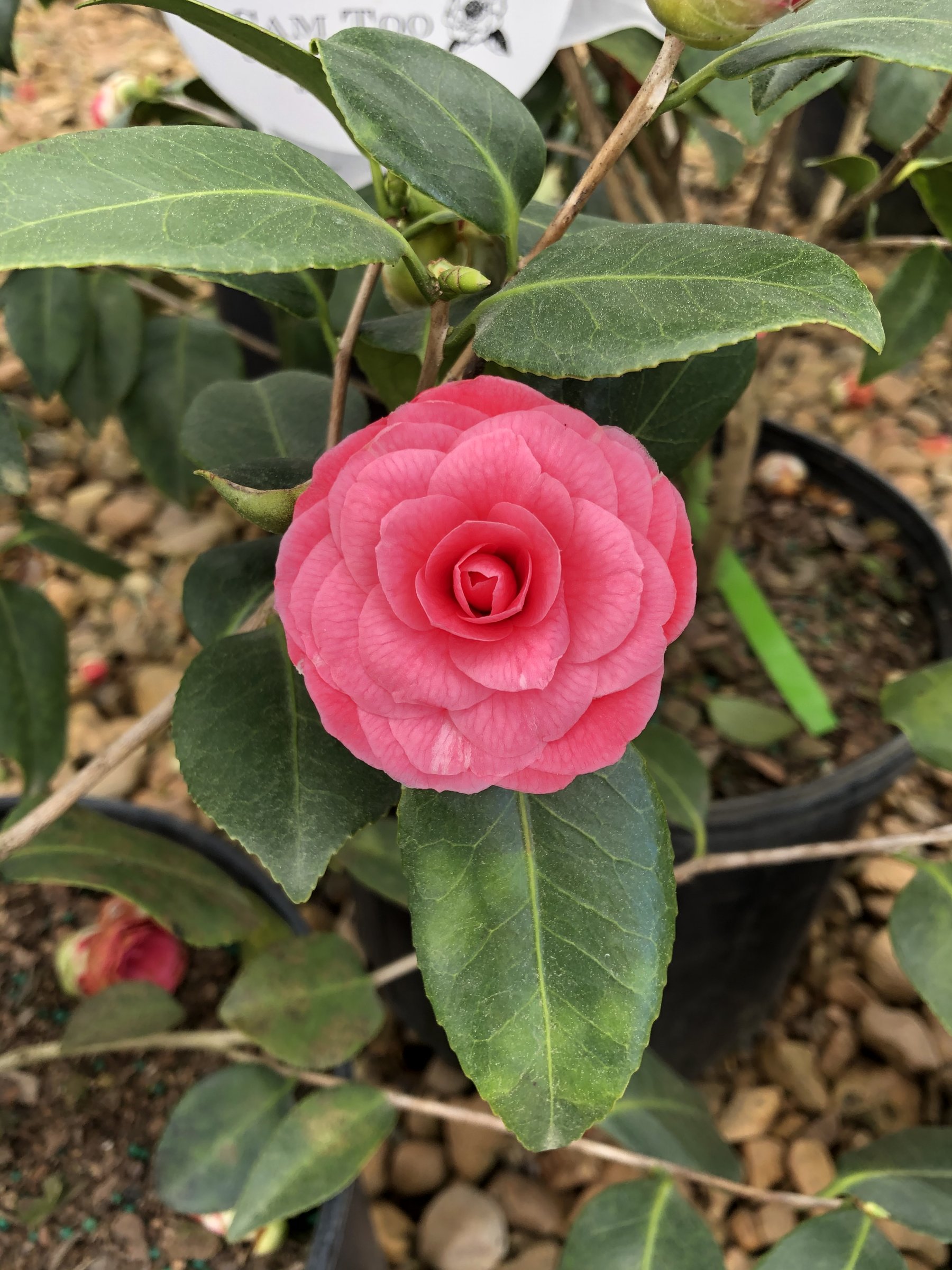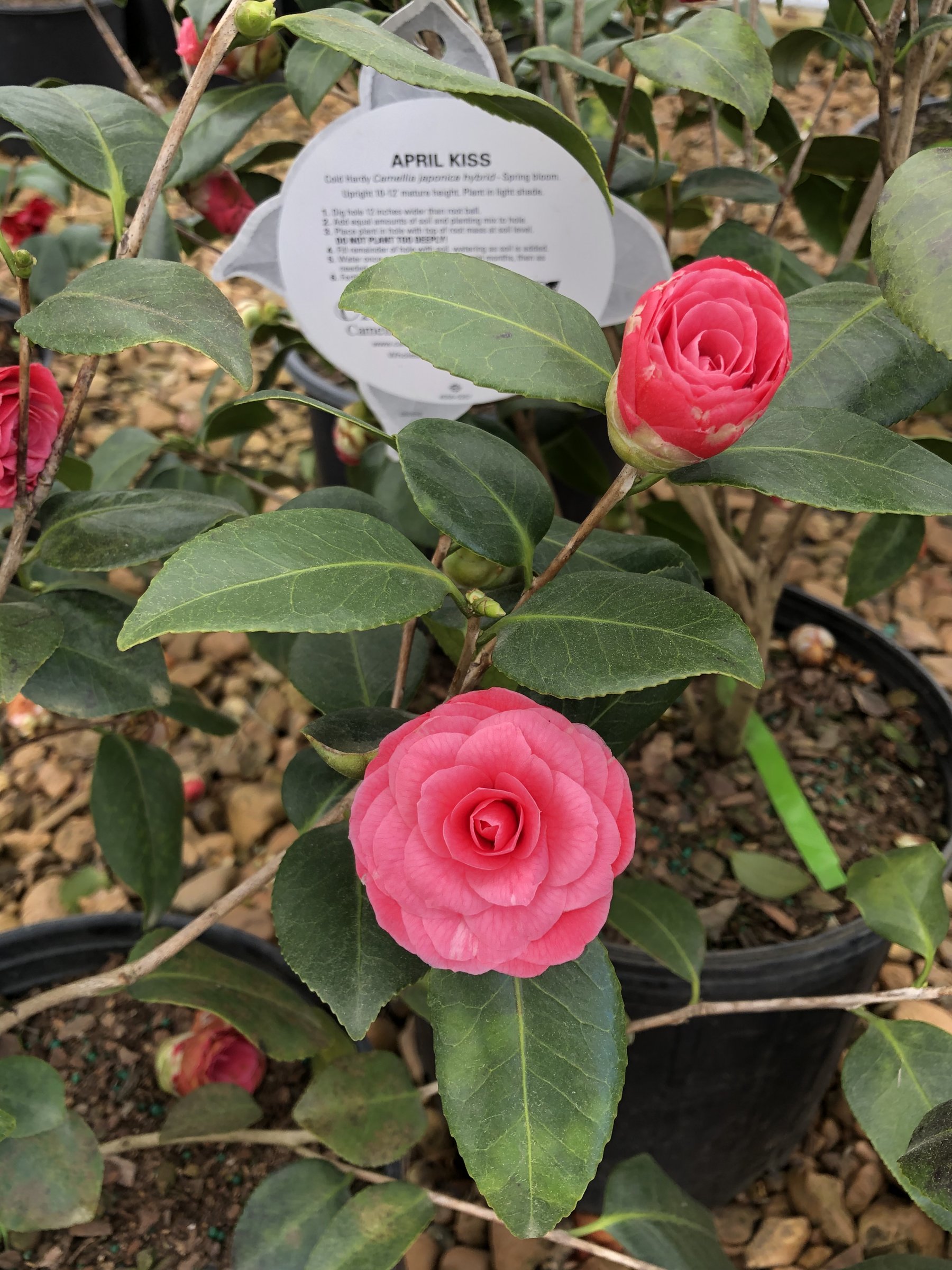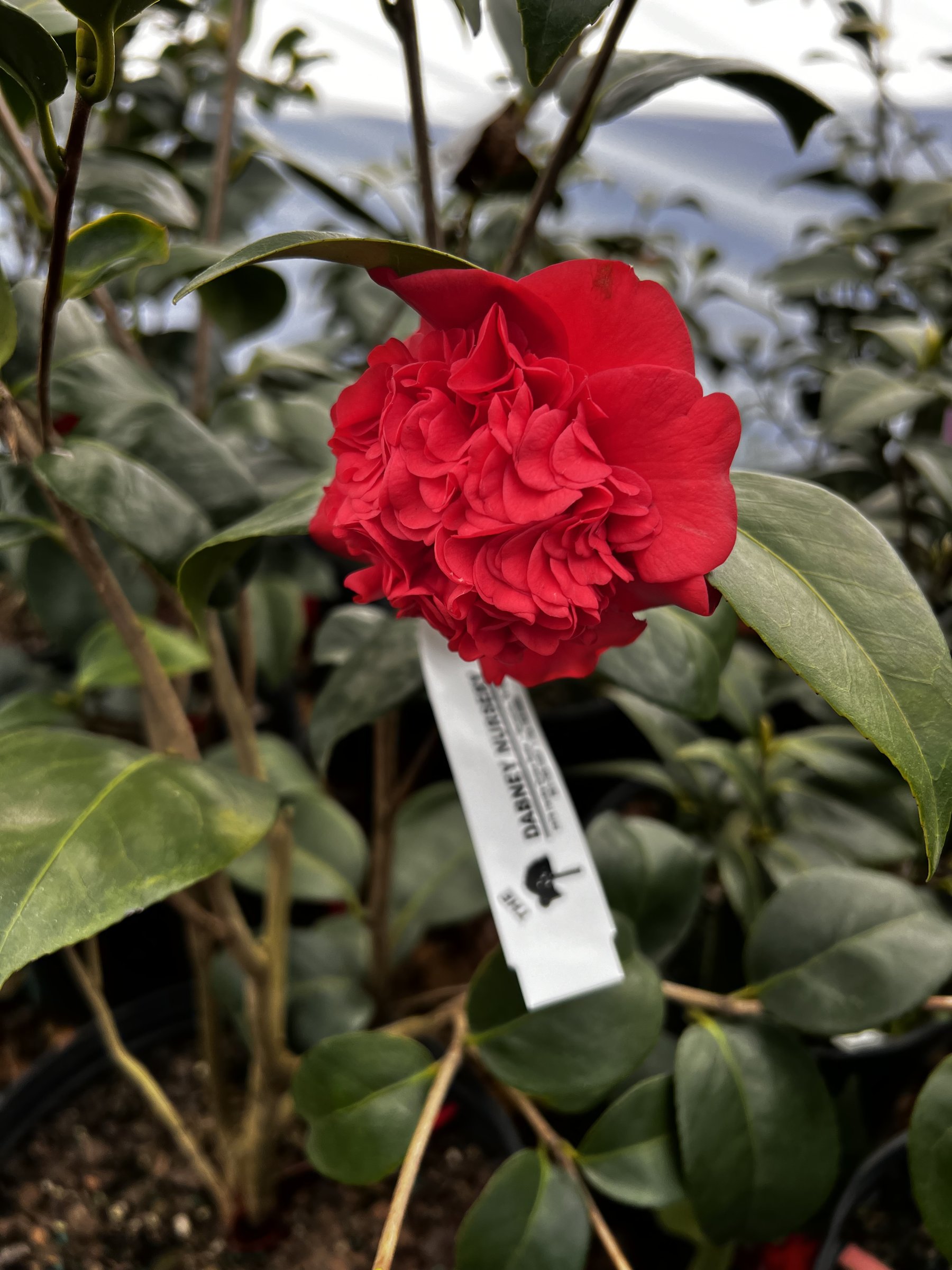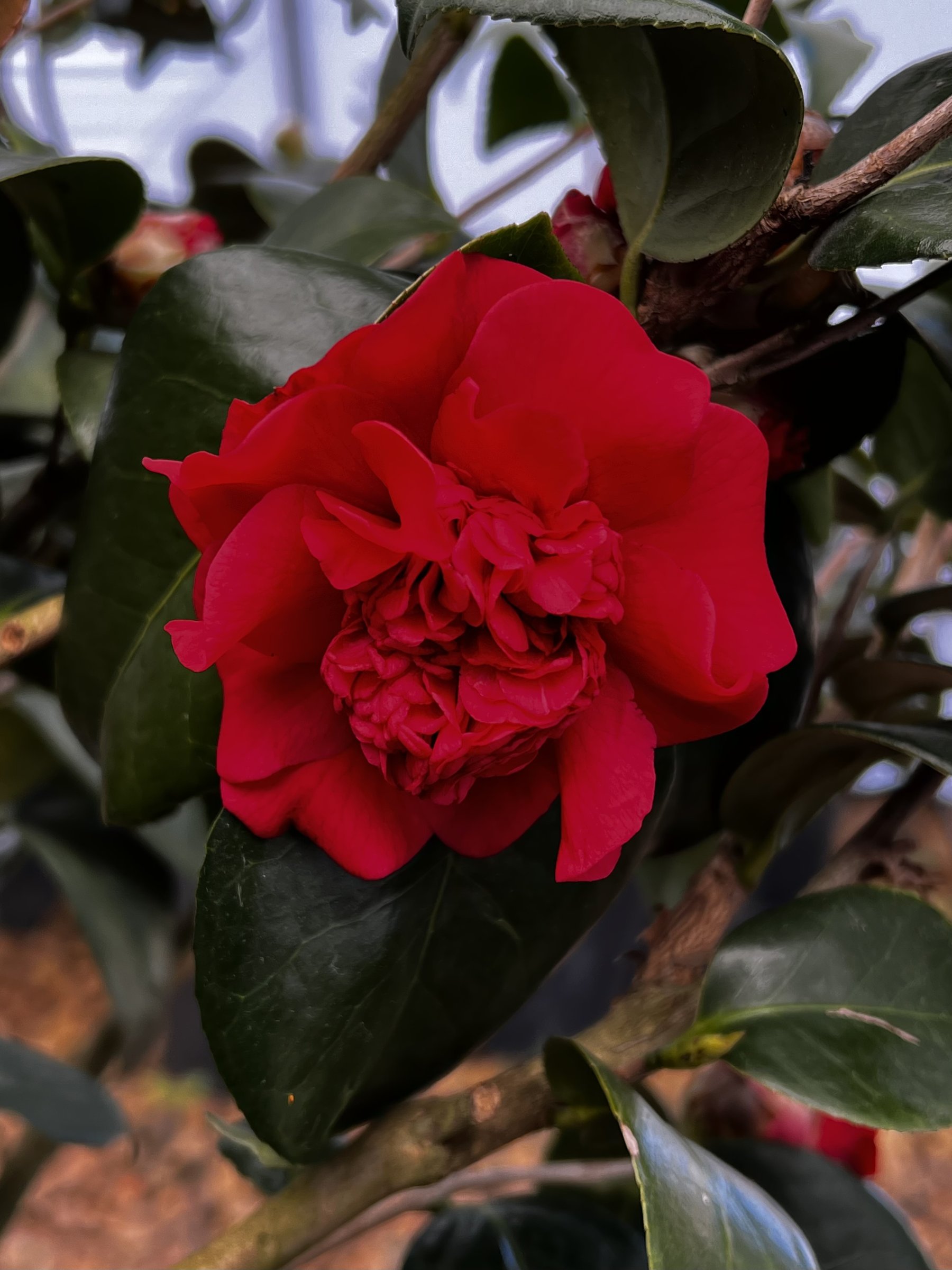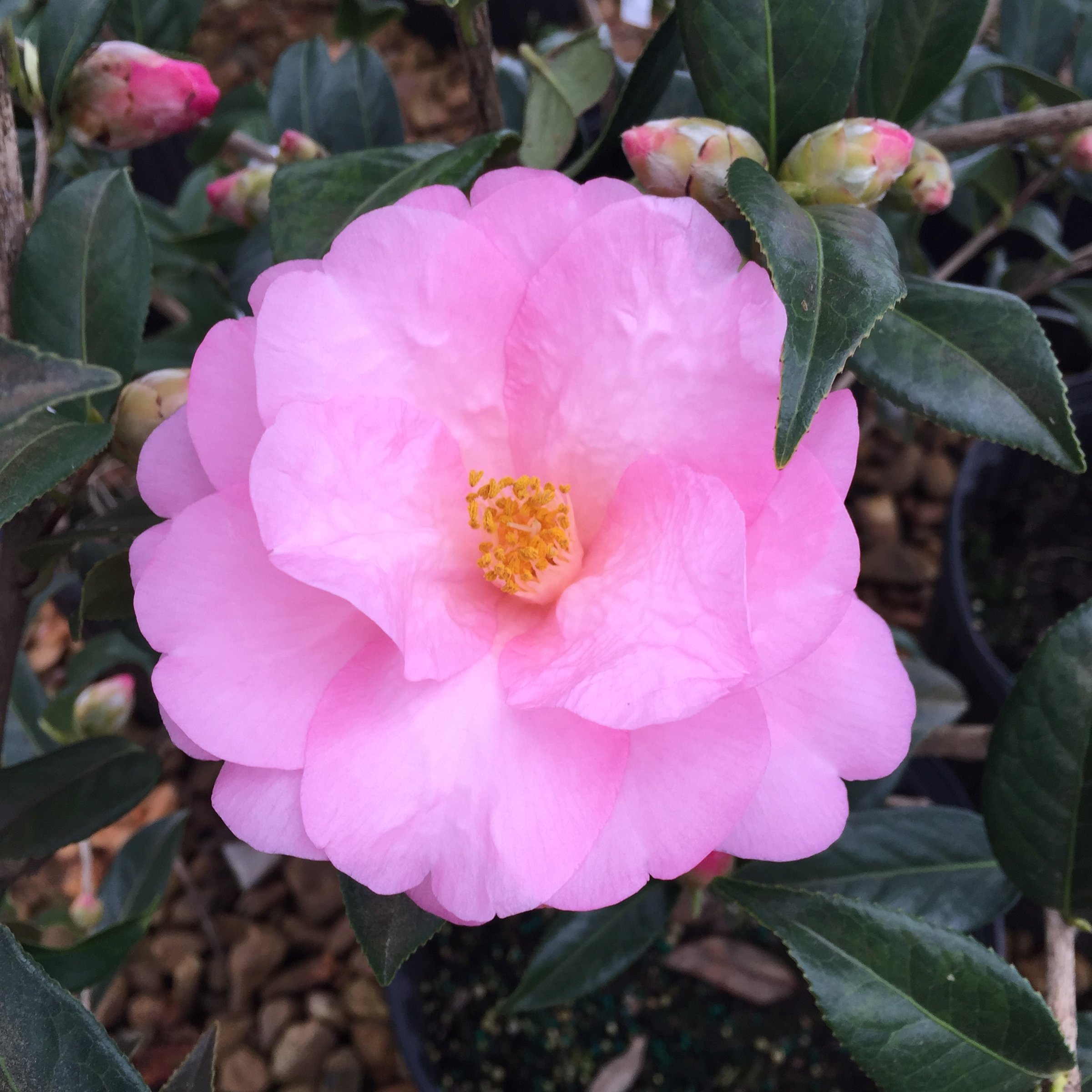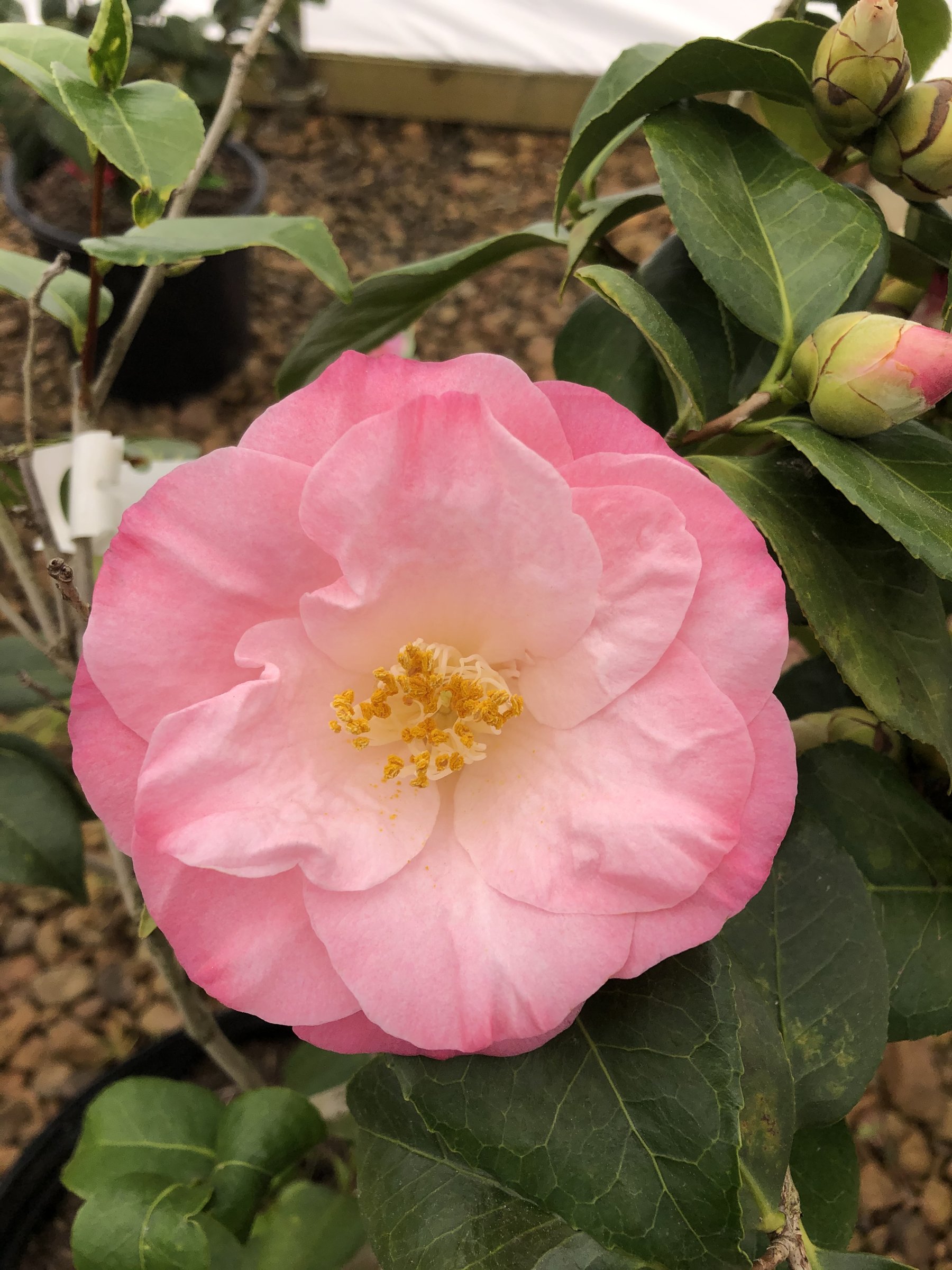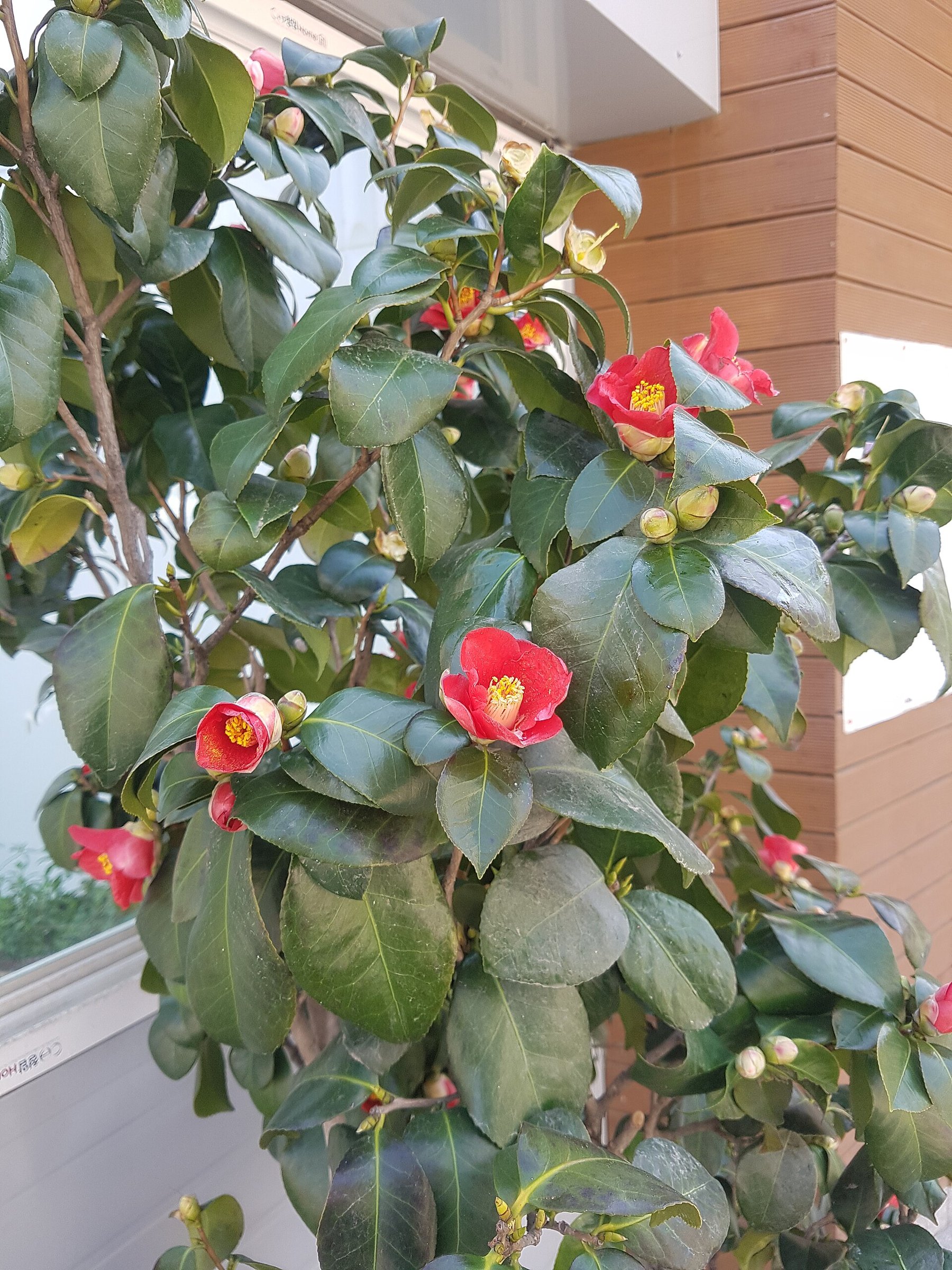


Plant: Pink Perfection - Camellia jap.
Camellia jap. · Camellia japonica 'Pink Perfection'
Size: 3 gal
Light
Bloom
Mature size
More about this plant
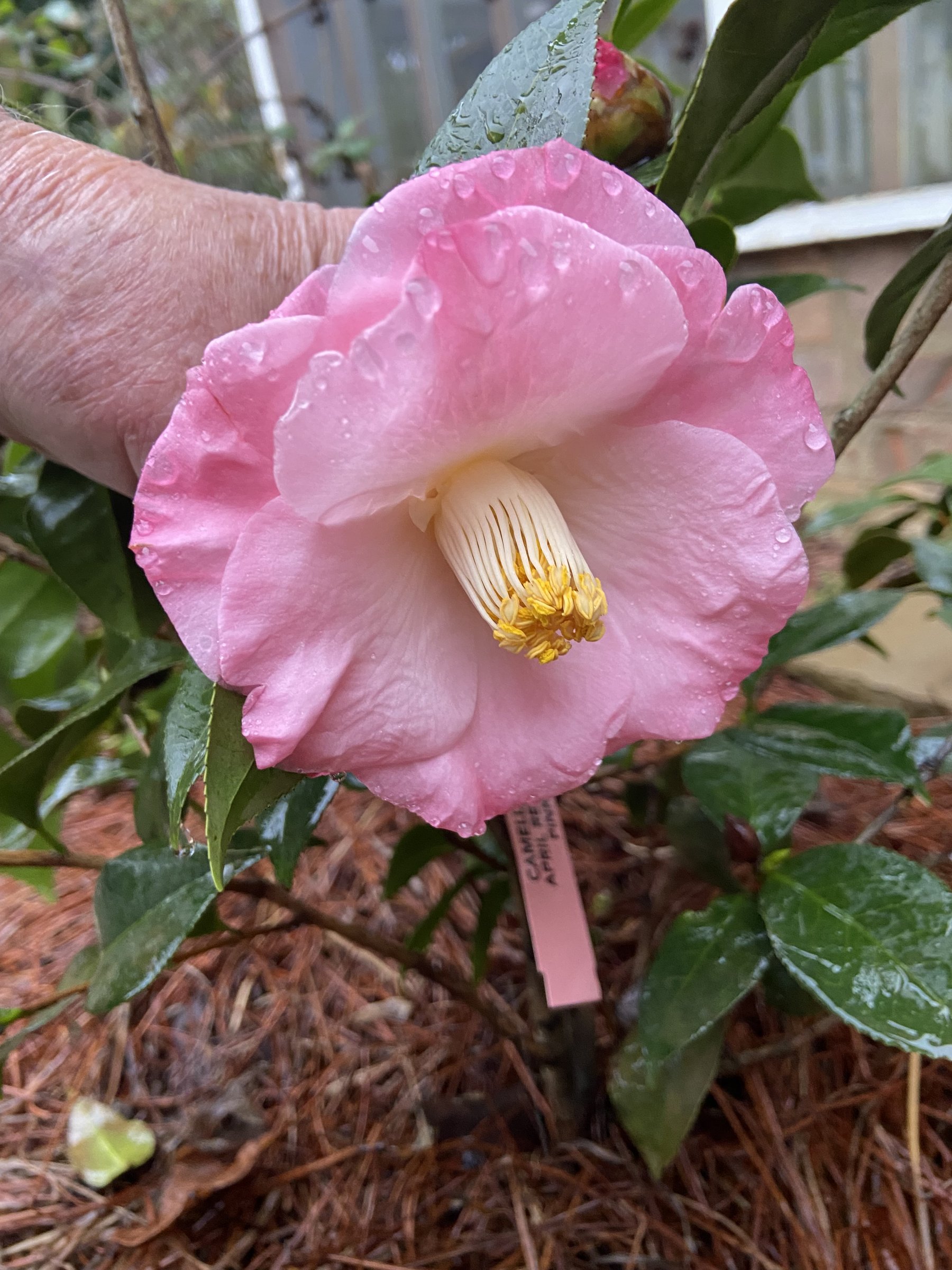
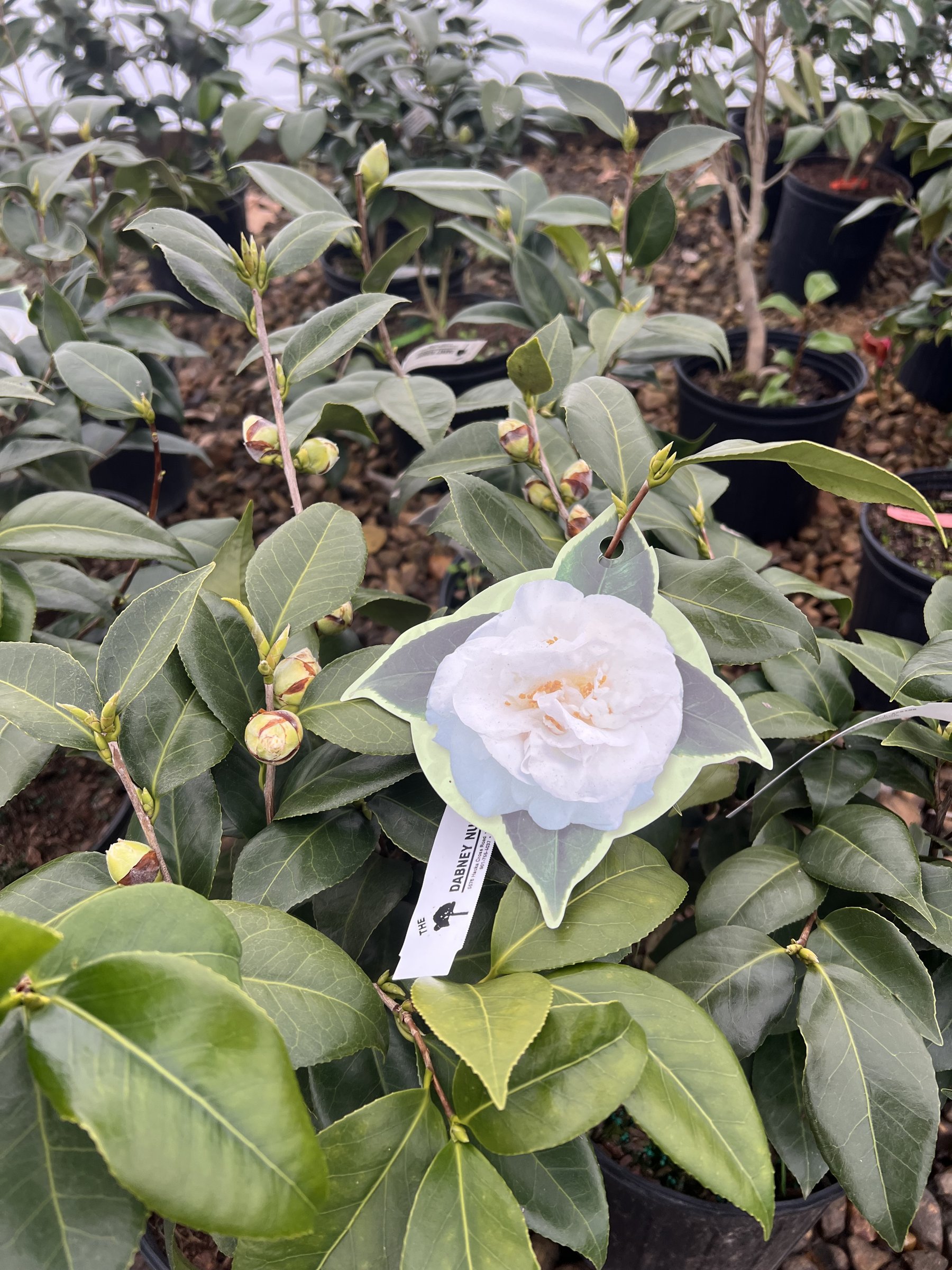
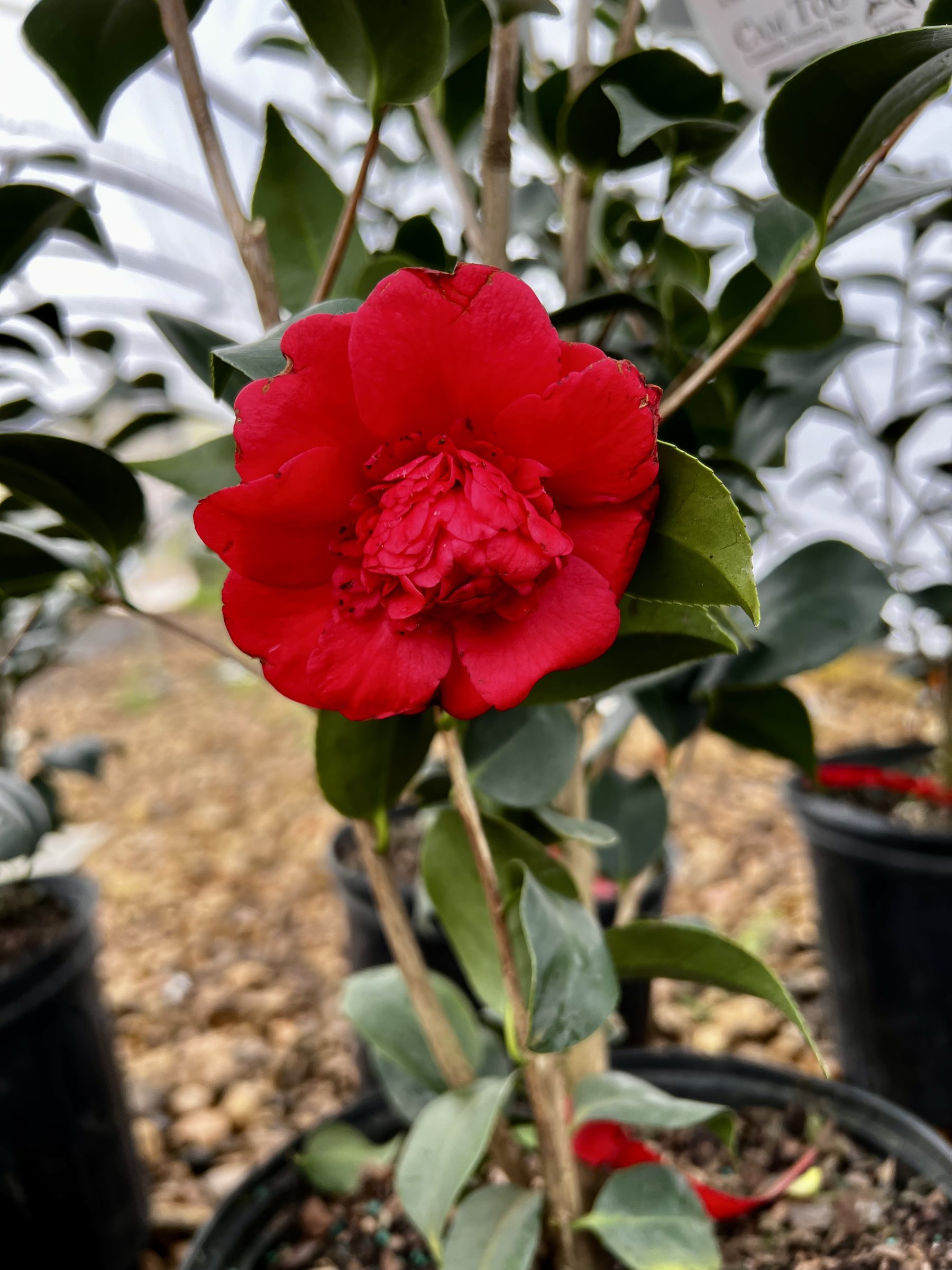
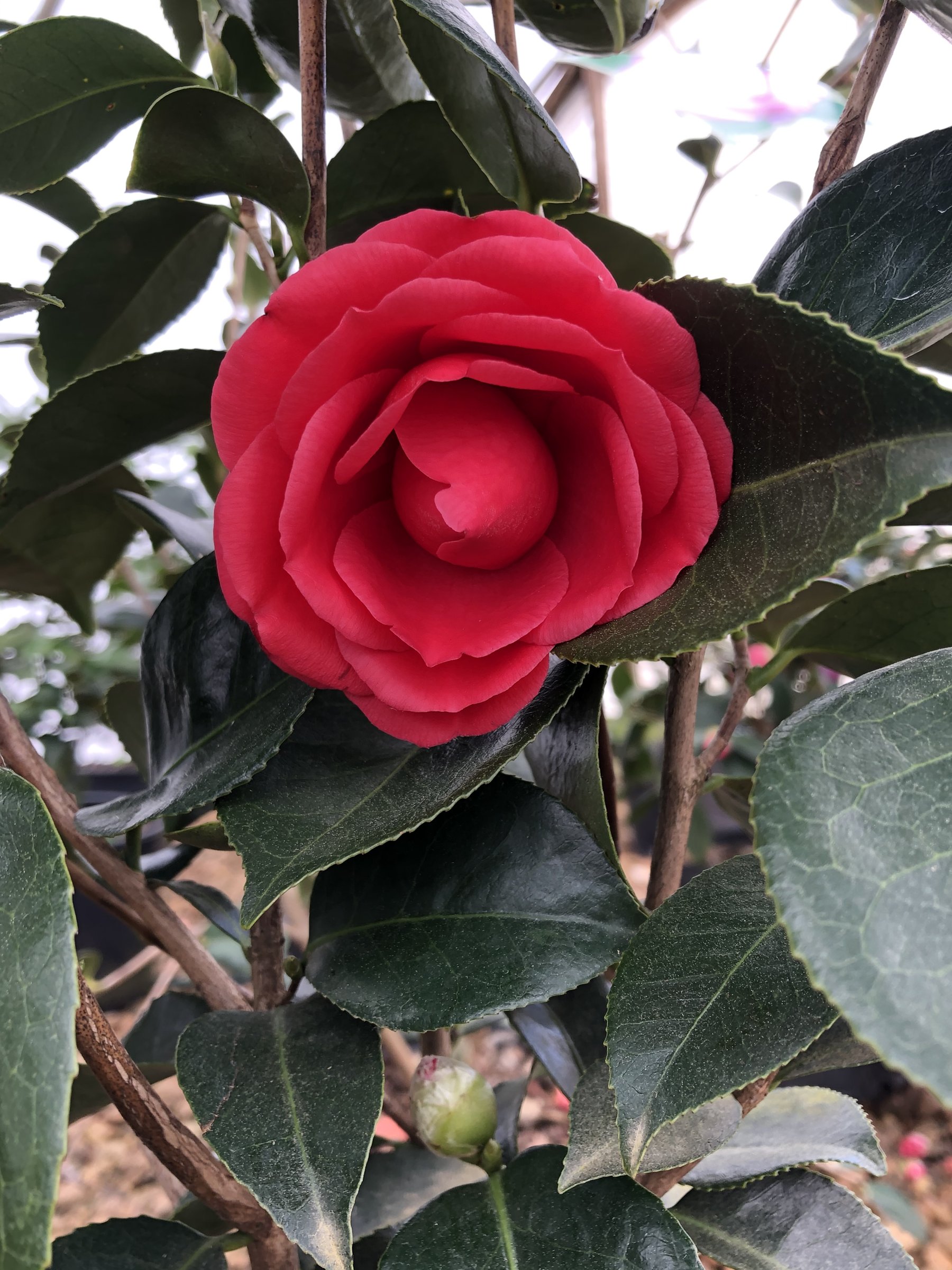
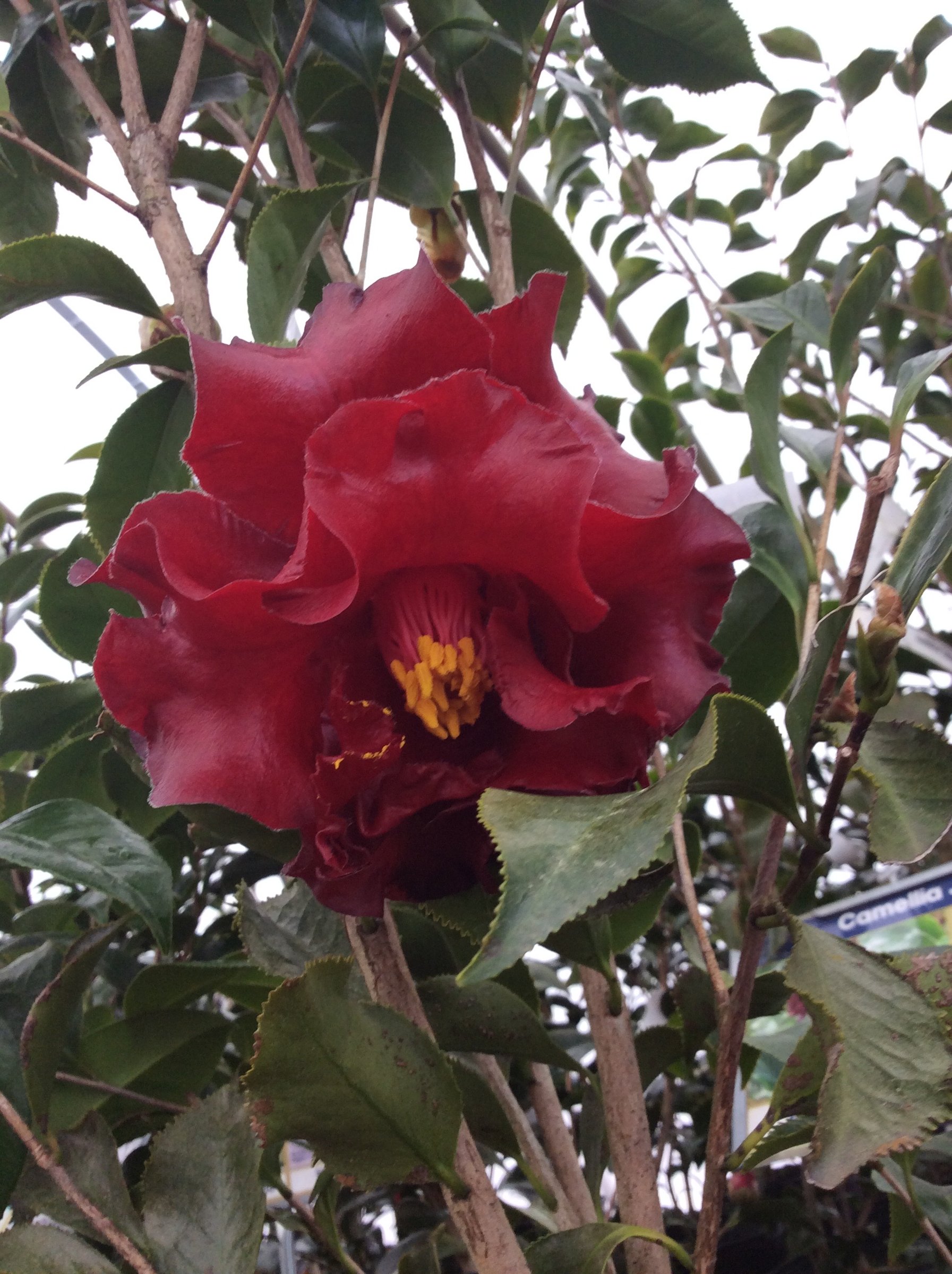
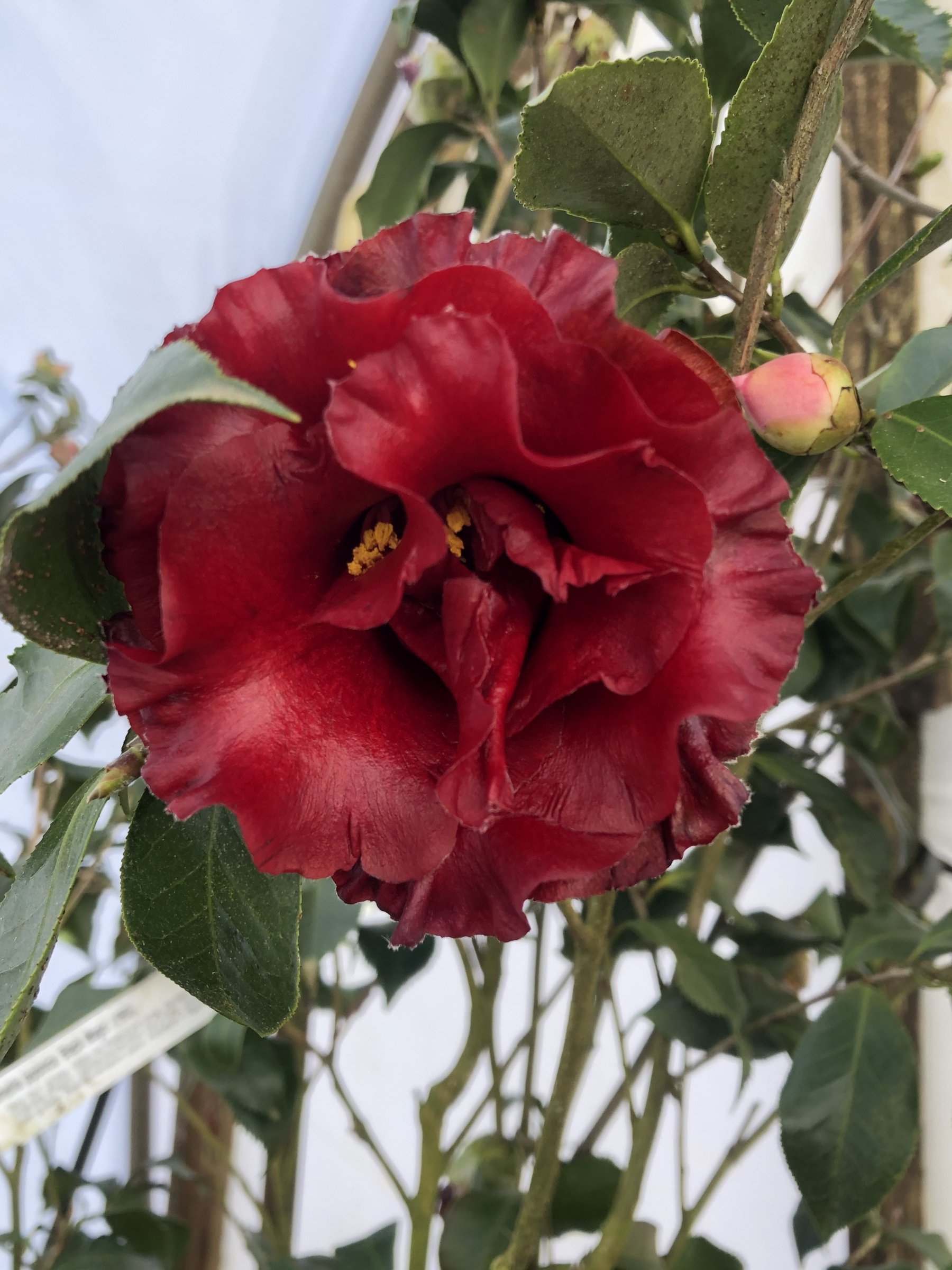
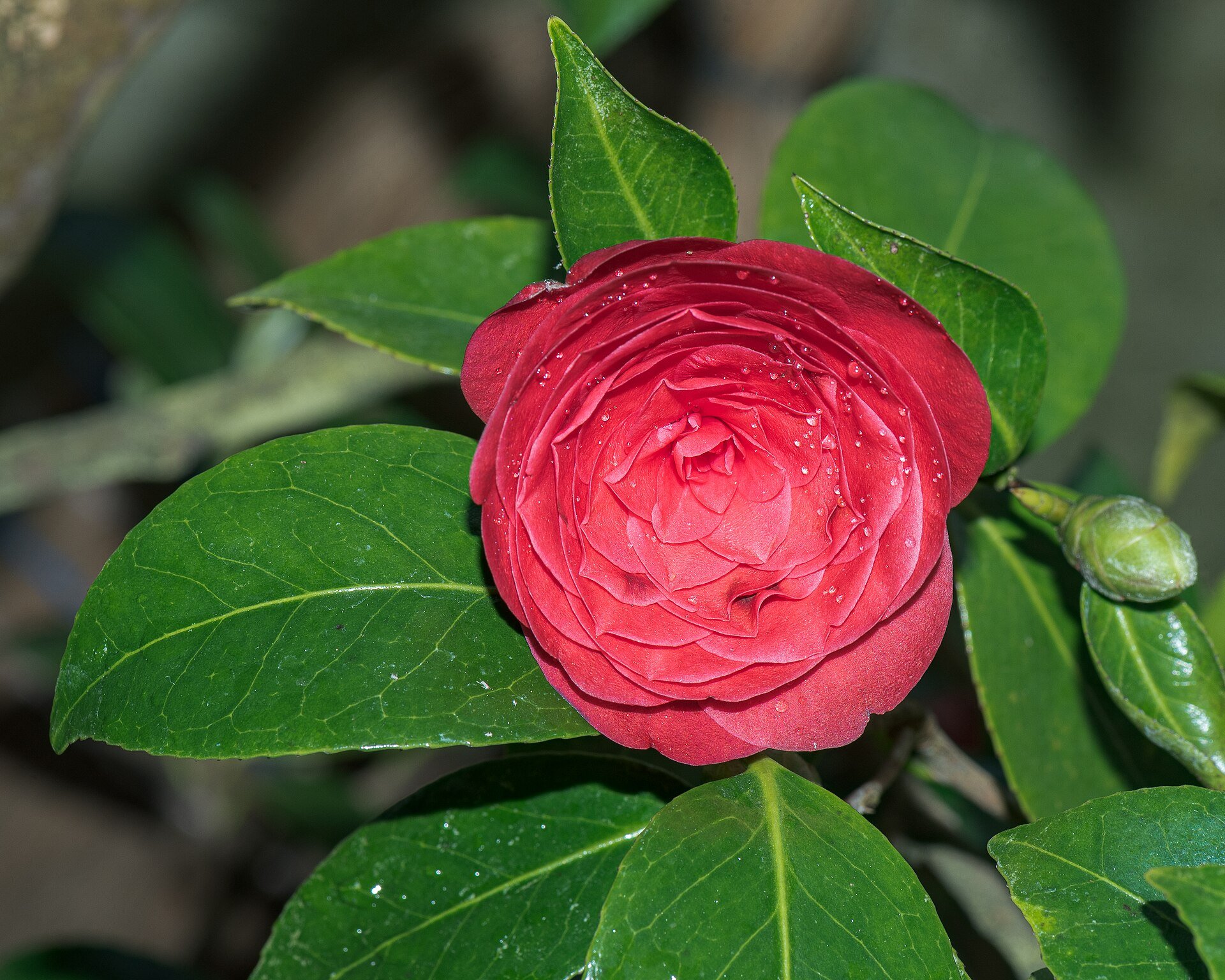
'Pink Perfection' is a cultivar of Japanese camellia, a slow growing evergreen shrub in the tea family that forms a dense, erect, columnar to pyramidal plant roughly 10 to 13 feet tall and 5 to 10 feet wide. Glossy, leathery, dark green leaves 3 to 6 inches long carry the plant year round, and solitary cup shaped flowers 3 to 6 inches across with 7 to 20 petals open in winter and spring. It wants partial shade with only 2 to 6 hours of direct sun, shelter from drying winds, and a moist, well drained, acidic soil rich in organic matter. Use it for foundation plantings, screens, hedges and accent groupings in the Mid South, where it is hardy in USDA zones 7 to 9.
- Part Shade
- Grows to 13 ft tall and 10 ft wide
- Blooms in winter, spring
- Hardy in USDA zones 7-9
- Evergreen foliage
Plant description
'Pink Perfection' is a cultivar of Japanese camellia, a slow growing evergreen shrub in the tea family that forms a dense, erect, columnar to pyramidal plant roughly 10 to 13 feet tall and 5 to 10 feet wide. Glossy, leathery, dark green leaves 3 to 6 inches long carry the plant year round, and solitary cup shaped flowers 3 to 6 inches across with 7 to 20 petals open in winter and spring. It wants partial shade with only 2 to 6 hours of direct sun, shelter from drying winds, and a moist, well drained, acidic soil rich in organic matter. Use it for foundation plantings, screens, hedges and accent groupings in the Mid South, where it is hardy in USDA zones 7 to 9.
- Flowers
- Solitary cup shaped flowers 3 to 6 inches across with 7 to 20 petals, borne in winter and spring.
- Foliage
- Simple alternate leaves, elliptical to ovate, 3 to 6 inches long and 1 to 3 inches wide, glossy, leathery, dark green with serrate margins.
- Fruit
- A brown capsule less than 1 inch long and wide.
- Bark & stems
- Stems are dark brown, covered with blackish lenticels, with crescent shaped leaf scars.
- Pruning
- Needs very little pruning beyond removing damaged branches. Severe cutting back with no leaves left can be done safely from mid February to about May 1.
- Native range
- China, Korea, Central and Southern Japan